Tuesday, April 26, 2005

Terry Nichols and the Rockies (Part Two): Wrangling for a Seat

Lawrence Dumont Stadium in Wichita, Kan. home of the Wranglers

I spent my first night in Kansas in the same motel where Timothy McVeigh stayed a couple days before, and passed the place where he rented the Ryder truck that he filled with explosives to blow up the Alfred P. Murrah Building in Oklahoma City.

I wasn’t trying to be dramatic or morbid. There just aren’t too many places to stay in that part of Kansas.

My assignment was to cover the court proceedings involving Terry Nichols, and to try to find out as much as I could about the man, who used to be a farmer on the fringes of the Flint Journal’s circulation area.

The next morning I drove down to Herrington, the small town where Nichols lived. I was a day behind the media horde that descended on the town, and it worked out better than I could have hoped.

Police blocked off the streets around Nichols small home the day before as they searched the house for bombs and clues. But this day life had more closely returned to normal and people where back in their homes. I spotted some of Nichols’ neighbors talking in their backyard and they invited me to talk.

Later that night a local church hosted a memorial service for the bombing victims in the biggest room in the town.

I sensed a mixture of shock, shame and hurt. I think people had a hard time dealing with the idea that one of their own was somehow involved with such a horrible crime.

Herrington is one of those small Midwestern towns that John Mellencamp sings about. Everyone knows everyone. And I think people were shocked that they didn’t know what this man was capable of – or ashamed that they did and didn’t take him seriously enough to stop it.

The service was an outlet for these people, as if to say this man was from this place, but he was not one of us. There were a lot of tears. Reporters are supposed to be observers. I felt like an intruder.

I spent much of the next week in Wichita, the closest city and site of the court house where Nichols preliminary hearing would be held. Since we didn’t know which day that would be, I was essentially staking out the courthouse all day.

There were a couple of other reporters doing the same thing, and that leaves time for friendly banter. But one day in mid-week a new Chrysler Caravan pulled up with the Midwest Bureau from CNN.

I thought this was a sign that something was going to happen. I remember a couple of us asked the CNN reporter if she new what time Nichols was coming, and she replied in a strange, sing-song voice saying “I can’t tell you that,” with as much condescension as she could possibly muster. OK, battle lines were drawn and we now had an enemy.

All this staking out and posturing didn’t leave a lot of time for baseball adventures. Compounding the problem was that the Wichita Wranglers, a Royals Double-A farm team, were on the road all week, depriving me of a chance to check out a pre-stardom Johnny Damon. A challenge, certainly.

But I found Lawrence-Dumont Stadium and convinced the folks inside to let me look around and take some photos. They even opened the gift shop just so I could buy a cap and some other souvenirs.

I got to know the court people a little bit since I was hanging around the building all week. And late in the week they let me know that Nichols would be coming in the next afternoon and showed me the big courtroom where the proceedings would take place.

Early next day the media horde arrived. The court activity wasn’t going to take place until 1 p.m. but people started setting up to get a glimpse of Nichols being hustled into the building.

A deputy told us that we could start lining up to get into the courtroom at 10 a.m. I planned to hang outside with the others, and I knew the courtroom was plenty big. But something inside told me to get on line. After burning through the Journal’s money all week, if I did not get into that court I’d have a lot of explaining to do once I got back to Flint.

The court officers lined us up on a bench in a lobby down the hall from the courtroom. I was No. 11 on line, with an artists hired by television stations to make the courtroom sketches, an Associated Press reporter, a writer from the Wichita Eagle-Beacon and a woman from a Detroit television station.

We had nice time sitting there gabbing, taking turns going on food runs and letting the artist warm up by sketching us. The line got longer and longer as time passed – I counted well more than 100 people -- and it included the snotty reporter from CNN, who waltzed in right before the appointed hour.

Terry Nichol's former home in Herington, Kan. His neighbors were nice.

A bailiff announced it was time to go in. He looked at the front of the line and counted off. “One, two, three, four, five, six, seven, eight, nine, 10, 11 and 12, follow me.” I thought they were taking us down in small groups.

Walking down the long hall, the guy from the Eagle-Beacon joked that we were going to be “In the front row,” saying it in the famous Bob Uecker voice.

We entered the court and I could feel the door close behind me. The big courtroom was already filled with every lawyer, court employee and person with connections who wanted in. We were not in the front row. We were in the last row – and no one else was getting in.

The Eagle-Beacon reporter shot me a wide-eyed look that was part amazement and part sheer joy. We waited on line three hours and got in. People who came minutes after us were down the hall with the people who walked in right at 1 p.m. – and we could faintly hear the angry screams of people who would have to explain to their editors why they did not get in that courtroom.

The proceedings started, and the key testimony was someone who said Nichols told him that “something big was going to happen.”

There at the defense table sat Terry Nichols. I was struck that he looked so … ordinary.

Even after talking to his neighbors, I think I expected a monster. McVeigh, after all, with his buzz cut, focused stare and unrepentant expression, looked the part of someone who could blow up a day-care center.

But there sat a slight man with metal-framed glasses. He didn’t look like a killer. He looked scared.

The proceedings lasted a while. As a person left the room, a harried and grateful reporter who was nest in line was allowed in. And when it was over, people trapped outside swarmed around the Associated Press reporter and pinned him against a wall as he read from his notebook.

I hurried to find a payphone and caught the eye of the CNN reporter who was so nasty earlier in the week. A better person might have stopped and let her know what transpired. But I just kept walking. My adventure had taken me away from home for nearly two weeks and it was time to dictate my story and head home.

Monday, April 18, 2005

Terry Nichols and the Rockies (Part One): Coors or the Keynote?

Coors Field on April 20, 1995. it was the first exhibition game with Major League players.

Ten years ago this week I sat in a microbrewery at Coors Field in Denver, eating a burger and watching the first televised reports of the Oklahoma City bombing.

In town for an education writers conference, I had no idea that I was about to embark on one of the wildest adventures of my life. It had just about everything — a little bit of danger, some misbehavior and, of course, baseball.

The first thing I did after checking in at the Westin was to walk to Coors, which that weekend was to host its first ever game with real players, an exhibition game between the Rockies and the vile Yankees.

This was the year following the baseball strike, and the start of the season was delayed nearly a month because a deal was reached near the end of spring training. Before the deal, the owners had threatened to start the season with replacement players, and Coors had already hosted an exhibition game between the replacement Rockies and replacement Yanks.

After lunch, I walked around taking photos of the outside of the stadium and raiding the gift shop of inaugural year merchandise.

Passing the box office, I thought, "What the heck," and asked if there were any tickets available for the game, which was scheduled for the following night, the same time as the keynote address of the education writers conference.

My experience is that when you’re asking for just one ticket, you can sometimes get in to a game that’s listed as being sold out, especially on the day before the game. Teams hold back tickets for players and VIPs, and if they're not going to be used they send them to the box office. But I surely didn’t expect there to be anything for a first game at a new stadium.

But the patient woman behind the glass said that she could indeed get me in, and with a pretty good seat, too.

This was a pretty heavy decision. And a lot of things weighed on my mind.

Keynote address of my first major education writers conference vs. a baseball game.

Guy talking about schools vs. a potentially historic baseball game.

Stuffed shirt spouting jargon between bites of rubber chicken vs. THE FIRST GAME AT COORS FIELD WITH REAL PLAYERS WITH A SEAT BEHIND HOME PLATE!

Indeed, these things weighed on my mind for a matter of three or four nanoseconds before I slipped the required cash under the window.

Not that I wasn’t a little sheepish about discussing this with other people at the conference. Let’s just say I slipped away at the appropriate time and didn’t return until much later.

Coors is an absolutely wonderful stadium, beautiful with its exposed brick and green ironwork. There’s a row of purple seats in the upper deck to note when you are a mile above sea level, and you can see the spectacular Rocky Mountains if you face away from field.

Before the game I bought an official souvenir ball with both team’s logos on it, and future Hall of Famer Wade Boggs signed it for me.

The vile yankees won 7-2. Scott Kamieniecki -- my neighbor for a short time -- started the game, and Dante Bichette hit the first of what was to be many Coors homers for him.

After the game I was excited to find out that the Yankees were staying at our hotel, I saw Don Mattingly at the front desk.

The first two days of the conference were pretty informative. Then on the afternoon of the third day I was sitting in a conference room attending a session when the phone on the wall started ringing. This was before we all had cell phones. It was awkward because it was ringing and there were no staff people there to answer it and no one wanted to pick it up. Finally someone lifted the receiver, listened -- along with the whole room -- and then said "Is there a Dave Murray here?"

I was both embarrassed and frightened. Everybody was watching as I got up and took the phone out into the hallway. I figured it had to be bad news. It was one of the Flint Journal editors. "There’s a Flint connection to the Oklahoma City bombing. Rent a car and get yourself to Kansas." I explained that Colorado and Kansas share a border, but they’re huge and it’s not like driving between Michigan and Ohio. "OK, check out and catch a flight."

I went back into the conference room and planned to sneak quietly back to my seat to gather my things. But I looked up and found all eyes on me. "Weeeeell?" someone said.

"That was my editor," I said, trying to conceal my glee. "I have to go cover Oklahoma City stuff."

To be continued...

Monday, April 11, 2005

Keeping score with my girl

I took my 8-year-old daughter to the home opener for the West Michigan Whitecaps on Saturday. As we were getting ready to go, I noticed she was carrying a scrap of paper and a pencil.

"Honey, what are you going to do with that, draw during the game?" I asked.

"No, it’s to keep score," Caroline replied.

My heart melted. I LOVE keeping score at a baseball game, and I’ve done it for as long as I can remember.

I’m not exactly sure why I do it. I remember seeing a cartoon once of a guy keeping score, and a second guy saying "I think they already have someone to do that." In fact, my buddy Will is indeed that person for the Columbus Clippers. And yes, I wear the green horns of envy.

I just think it’s a neat way to stay focused on the action, and see how a player is doing throughout the game. And it’s fun to look back and see which players we were able to watch. I was thumbing through an old Toldeo Mud Hens score card and it showed I had an opportunity to boo Chipper Jones when he was a Richmond Brave.

It also gives me an excuse to buy a program at every game, as if I needed one. Although there was a period when Will and I were headed to Tiger Stadium about once a homestand. And since the Tigers didn’t change their programs too often, I bought a score book from MC Sports and carried it around to every game we attended during those seasons. It's a cool sounvenir of a whole year of baseball.

I’ve tried to teach my son how to keep score over the years. But he’s typically only interested after the batteries in his GameBoy die around the seventh inning.

But Caroline might be my best hope to pass the love of scoring down to another generation. She’s detail-oriented, loves to learn and is obsessively neat -- perfect traits for a scorekeeper. And since she’s only 8, her interest in baseball games was previously limited to following the mascots around and scraping Lemon Chills. I was overjoyed that she wanted to do something that gets her a little more into the game.

We picked up our programs -- they’re free at Whitecaps games -- and pulled out our pencils, because you just shouldn’t keep score in pen. We went over the basics, talking about how you make a little diamond in the box when someone gets on base, and how each person on the field has a number that corresponds to his position, not the number on his uniform.

We copied down the starting lineups as they were introduced, and started scoring with the first pitch.

I had one of those "I’ve-got-the-greatest-daughter-ever" moments when I asked her if she wanted something to eat about halfway through the game. She responded, "Daddy, if we leave our seats, how can we write down what happened?" I nearly wept.

In the bottom of the eighth inning, a man sitting in front of us turned around and complimented her scorecard. "You’re doing a good job," he said. "When I overheard you doing that at the start of the game, I didn’t think you’d stick with it. I can’t believe you’ve done it for the whole game."

That’s my girl!

Tuesday, April 05, 2005

Glories of Opening Day

Tom Seaver delivering on an Opening Day for the Mets.

My buddy Will insists that Opening Day of the baseball season should be a national holiday.

Of course he’s absolutely right.

It’s a national day of optimism, when all teams start with a clean slate and have a chance at the pennant. It means spring is here, or here in Michigan it means at least spring has the potential to arrive within the month. Maybe.

I’ve been blessed to attend a number of Opening Day games in my life. Here are some of the favorites:

April 5, 1975 -- Mets 2, Phillies 1: My Grandmother lived with us when I was growing up, and she was a big baseball fan. We’d go to a couple games a year, and this year we made it to Opening Day — my first one. I had just turned 11 two days before and was in full boyhood baseball hero mode.

Tom Seaver, my hero, was pitching. We sat on the third-base side because Seaver’s a right-hander, and his back would be to the first-base side when he pitched and we wanted the best view.

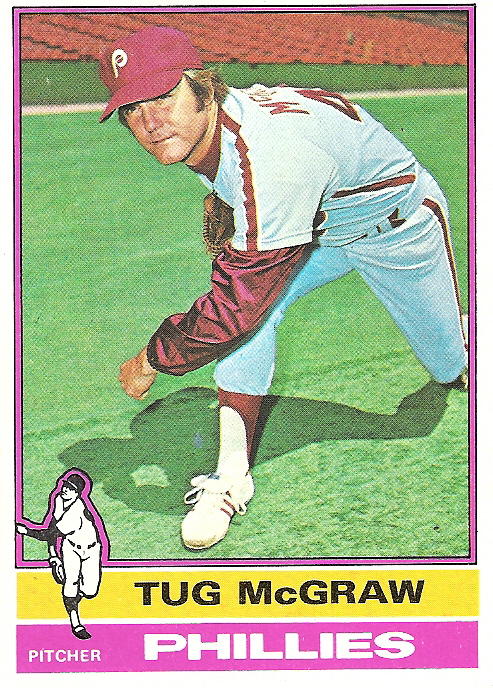
That was a big winter for the Mets, having traded fan favorite Tug McGraw to the Phillies and acquired all-or-nothing slugger Dave Kingman from the Giants and Joe Torre in a trade from the Cardinals.

My grandmother completely spoiled me and we were at the game as the gates opened. She bought me a yearbook and program and as we headed to our seats I saw McGraw by the dugout being interviewed by the former Met Ron Swoboda, who was a sportscaster for one of the television stations.

I remember running down to the front row to watch. It was my first time being that close to a major league player in uniform. I remembered from Swoboda’s 1973 baseball card — I could recite all the little cartoons on the backs in those years — that his nickname was "Rocky." I mustered up the courage to say "Hi Rocky," and Swoboda looked up and waved. Contact with a baseball player! Yes! it didn’t get much better.

The game was awesome, a pitcher’s duel between Seaver and Steve Carlton, each throwing a complete game. Kingman hit his first homer as a Met and Torre drove in the winning run in the bottom of the ninth.

To show how much times have changed, Baseball-almanac.com -- a great site -- lists the attendance that day at just 18,527. And that’s before the rise of the Yankees and the Mets were still the toast of the Big Apple.

April 5, 1983 -- Mets 2, Phillies 0: Tom Seaver’s return the Mets! I was in college by now and some of my friends at the college newspaper also were Mets fans. To celebrate my birthday we all decided to go see the Mets and Seaver. It was one of the first times driving in to the city and going to a game without parental assistance.

Being college kids, we didn’t think about details like getting tickets ahead of time and we were stunned to find the game was sold out. After walking around the stadium a couple times in shock, we walked up to the subway platform outside the right-centerfield seats where you could get a decent view of the action.

My friends humored me and we stayed up there for most of the game. Again it was Seaver against Steve Carlton. Neither team scored through six, and Doug Sisk came in to pitch the final three innings to get the win.

It was an emotional day for a Mets fan, and especially a Seaver fan. He’d been run out of New York in 1977 by the previous regime, and the new owners sought to heal those wounds by bringing Seaver back. It was a year-long lovefest, and I remember seeing the "Welcome Home Tom" banner from the subway platform.

Seaver's 1984 Topps card has always been one of my favorites because the photo was taken on that Opening Day -- you can tell by the bunting in the background.

April 5, 1993 -- Marlins 6, Dodgers 3: My parents also spoil me. They had moved to Florida a couple years earlier, and we were all excited that a major league team was coming to Miami.

I had come oh-so-close to getting tickets to the team’s first-ever game over the phone. I somehow got through right as they went on sale, and was put on hold. I figured I could keep typing — I was working — if I switched to the new headsets we got a couple days before. I heard a "click" and the dialtone — and my colleagues heard something unpleasant coming from my cubicle. Dooh! It was 40 minutes before I could get through again. The first game was sold out, but I could buy four upper deck seats to the second game, which I snapped up.

A couple days later my mother called and said my Dad found a way to get a ticket for Opening Day. It was expensive, but it could be my birthday present. I told her that was really kind, but that was expensive and not to worry about it. I called her back about a half hour later and said "Go for it!" She knew I would.
The Marlins take the field for the first time.

What a fantastic day! Brilliant Florida sunshine for an out-and-out celebration of baseball. Charlie Hough was the Marlins’ starter, throwing against Orel Hershisher.

Wearing my cool teal cap, I was in prime souvenir mode, buying official first-day programs and a way-cool foam rubber Marlins hat.

Virtually every movement on the field was a franchise "first" and brought cheers. Scott Pose, who beat out Chuckie Carr for the starting centerfield job in spring training, was the first batter, Bret Barberie for the first hit and Benito Santiago scored the first run.

I’ve been privileged to attend a number of historic baseball games, and the first day for the "Fish" is up there at the top of the list

April 13, 1993 -- Tigers 20, Athletics 4: Two Opening Days in one year! The Tigers started on the road that year, and I got home from Florida in time to get to Tiger Stadium for my second Opening Day there. The Tigers were pretty awful through the 1990s, and apparently well into the 2000s. So to see this offensive outburst against a decent A’s team brought some hope and cheer to D-Town.

I had a streak of Tiger Opening Days going for a while. I was able to link some to work, attending in 1995 to interview fans about the first game back after the player’s strike and again in 1999, the last Opening Day at Tiger Stadium.

My mission for both games was to find people from the Flint area for the story. It’s actually not that tough to pick out Flintites in a crowd of 55,000. A lot of them wear UAW jackets that list the location of their local, and a lot of high school kids wear their school jackets. The upper deck in Tiger stadium wasn’t that far from the lower seats, and I learned that I could go to the upper deck railing, look down and see the backs of a lot of fans below then run down and ask them questions for the story.

It also didn’t hurt to have some plants among the spectators. I knew our friends Tom and Glennie would be attending the openers, and I’d get their seat locations ahead of time, guaranteeing that I’d have at least some local fans quoted in the story.

I haven’t been to a major league opening game since then, but we’ve attended most of the openers for the West Michigan Whitecaps, the Tigers’ Midwest League team here in Grand Rapids. The Caps are hoisting this championship banner at this week’s opener and we’ll be there!

And go to Will’s Web site -- Baseballtruth.com -- and sign his petition to get Opening Day named a national holiday.

Monday, March 28, 2005

Birthdays and Opening Day


The grass in a Major League stadium is a brilliant green on Opening Day, radiant compared the the still-brown lawns in our Midwestern cities.

Of course, the stadiums have an advantage. They paint the grass.

I didn't know this -- and probably wouldn't have believed it -- until I saw it for myself.

My birthday is in the first week in April, and sometimes falls on Opening Day, which my family says is appropriate. But my birthday came in 1991 and I remember going through a rough stretch at work and being in a foul mood.

Then my colleague and buddy, John Munson, arrived with one of the best birthday presents ever. John was a photographer at the Flint Jounral and we often worked together. He convinced the editors that what we really needed was a story about how workers get Tiger Stadium ready for Opening Day, and how I should tag along to supply the words for his photos.

The editors signed off, and what an awesome day we had.

We had lived in Michigan just over a year at that point, and had been to Tiger Stadium many times. It was a wonderful old stadium, full of little oddities -- and some big ones, too. And I was thrilled to get a chance to see things going on behind the scenes, stuff fans don't typically get to experience.

We arrived around mid-morning, picked up our credentials and were excited to see that we had complete run of the stadium.

The Tigers' opening series with the Yankees was still a couple days away, but the stadium was bustling with activity. We went out to the field first, following the loud noise coming from centerfield. Out in the middle was a crew covered in green spraying what appeard to be paint on the grass. I was stunned. It was one of those "pull-the-beard-off-Santa Claus" moments. We walked on the crushed gravel warning track to centerfield, touched the base of the famous in-play flagpole -- because we could -- and chatted with the crew members. The explained that the "paint" was a mixture of fertilizer and food coloring, enough to keep the grass looking great in April and May.

We then poked around the dugouts, which are really cramped, and walked up the narrow tunnel that leads to the clubhouse. There's a small sink in the tunnel, just deep enough in so that it can't be seen from the stands. Goodness knows what the players do to or in it.

We checked out the Tigers clubhouse first. Workers were installing new blue carpet and tiger-striped wallpaper in Sparky Anderson's office. Player lockers are not like lockers you see in schools. There are no doors, just spots along the wall separated by something that looked like a small chain-link fence. Director chairs with the team's Old English D logo were on top of each locker, I assume because of the carpet work. Boxes of new batting helmets were arriving. We tried them on because, again, we could!

We then ventured into the trainer's room, which is off-limits to reporters during the season. Tiger pitching legend Jack Morris had left the team for the Twins during the winter, and Morris had written a personal note to the trainers and taped it to the wall for them to see when they came north with the team. It was neat because Morris had a reputation of being very grumpy, so it was nice to see another side of him.

The visitors clubhouse was really spectacular. The walls are covered in white ceramic tiles like you'd see in a bathroom, expect players through the years had augraphed them. The guys fixing cracked tiles told us they spent a couple hours walking around the room reading the walls.

We then moved into the bullpens, which are cages sunken into the ground. The view is horrible -- probably the worst seat in the house -- and it's got to be hot in there during the summer months. It's also so deep that players need a little wooden staircase to get in and out, and that wasn't yet in place when I jumped in, so it was a little tough getting out.

We later walked around the press boxes and boxes that run along the roof of the stadium that must have been used when the Lions used the stadium, too. They ran all the way along the top into rightfield. There wasn't much inside, just something that looked like a running shelf or desk where you would set a drink or laptop on. There were no seats or anything, and it was nothing like the luxury boxes I've seen in other stadiums. Unlike the bullpen, the view was awesome. I was higher than any seat in the stadium, and still closer to the action than anything in New Comiskey Park's upper deck. We opened another door and ended up on the actual roof of the stadium.

It was fun talking to the workers, who seemed to have an appreciation for the historic building they were working in. I remember one of the guys in the visitors clubhouse pointing his chisel around the room listing players who must have passed through at one point.

We also spent time with the man responsible for painting the logos on top of the dugouts. It's a tougher job than you think because the Tigers logo at the time was pretty complicated and there weren't stencils. And unlike some stadiums that have pre-painted boards attached to the top of the dugouts, this man was painting these logos right on the roof. He said it took about two days of kneeling on concrete to get the job done each year. But it was a point of pride for the artist, a sign-maker from Troy. He had done it since 1985 and loved to come back to the park during the year and inspect his handiwork.

Tiger Stadium was open another nine years after that, and each time I returned I'd look to the boxes on the roof, the sunken bullpens and the brilliant green field and think of that birthday.

Wednesday, March 23, 2005

Middle-schoolers, the Mets and unconditional love

I spent last weekend with my church's youth group at a Christian camp here in Michigan.

I love working with middle-schoolers, but they're a mess, and I don't just say that because the boys completely trashed the inside of our cabin within an hour. They have issues, only some of which they'll tell you about.

So I spend a lot of time each week talking about God's unconditional love for them, which is a pretty big concept for a 12-year-old.

I tried to illustate the point last weekend with one of my favorite songs: "More" by Matthew West. I have the refrain taped to my monitor at work so I can read it when I'm feeling down. It's written from God's point of view. It goes like this -- and trust me, you're better off reading it than hearing me sing it.

"I love you more than the sun
And the stars that I taught how to shine
You are mine and you shine for me, too
I love you yesterday and today
And tomorrow I'll say it again and again
I love you more."

I get emotional every time I sing the words "You shine for me, too." What a beautiful line. The notion that a flawed person like me -- and I have big flaws -- can shine for the Lord who is so powerful that he made the heavens is both humbling and joyous. When something lousy happens at work, I read that and think , "Well, at least I got that working for me."

I think the kids understood. It's kind of hard to tell, but they'll let me know in small ways when I least expect it.

And I think that since I receive unconditional love, I have to give it, too. Of course my kids get some, but that's easy. The Mets, however, are another story.

I don't know why I'm so drawn to the Amazin's. Goodness knows they've broken my heart. I was so angry on June 15, 1977 -- the day M. Donald Grant sent Tom Seaver packing -- that I jumped over to the Yankees camp. It lasted about a half-hour. I just couldn't do it.

My buddy Will teases me about my blind devotion. And he's right. I think they've got a chance to win every year -- especially this year. And I won't conceed they're out of the race each year until the day they are mathmatically eliminated. And even then, I'm not all the way sure it's over.

If I can forgive trading Seaver, then I can forgive stuff like Kenny "Bleeping" Rogers forgetting how to throw strikes to Andruw Jones in Game Six of the 1999 NLCS, or Armando Benitez serving up grand slams to Brian Jordan or giving up on Jason Isringhausen too early or not putting Roger Clemens on his butt after he skulled Mike Piazza.

I've almost forgiven them for messing with the home uniforms by adding that fat tail under the script Mets for a couple years in the 1990s, but I'm not quite there yet.

So when Opening Days declares winter dead and gone next week, I'll celebrate the arrival of Pedro and Beltran, a full year of David Wright and a healed Jose Reyes. Looks like a bright shiny year to me!

Monday, March 21, 2005

Pop Shortell, Dave Winfield and Richard Nixon

Matthew "Pop" Shortell meets sluger Dave Winfield.

I cover schools, but every once in a while I get to work baseball into my job — and it creates memories of a lifetime.

I was working for the Bridgeport Post in Connecticut back in 1987, and a local man, Matthew "Pop" Shortell, was named "Sports Nut of the Year" by a nut company.

Shortell was one of those people you seem to only find in small town America. A lovable, large older man from blue-collar Ansonia, he seemed to be the referee at every high school football and basketball game, and was famous for yelling out the name of the pitcher and catcher at the start of every youth baseball game he umpired.

He also was famous for his devotion to the New York Yankees. And after hearing about the nut company’s promotion, the team invited Shortell to Yankee Stadium.

My colleague and buddy, Rich Nangle, was going to cover the event, and I was able to tag along, ostensibly as the photographer. Shortell is a nice guy and all, but we were thrilled because this was an opportunity to attend a game for free, run around the stadium with our press passes and sit up in the press box.

Before the game, the Yankees public relations manager led Shortell — with us in tow — to the corridor outside the Yankees clubhouse, which is off limits to anyone except the media and sick children.

The staffer ducked into the clubhouse, and walked out with star pitcher Ron Guidry, who came over, thrilled Shortell with some small talk and posed for a photo.

"Pop" Shortell meets Ron Guidry.

The staffer went back into the clubhouse and came back with reliever Dave Righetti, who, like the Gator, was very pleasant and Shortell was beside himself that these guys would take a couple minutes to meet him — not realizing that they probably do this kind of thing a couple times a week.
Dave Raghetti can't bare to watch.

The staffer said, "Hold on, let me see if I can get one more guy" and headed back into the clubhouse. This was already pretty impressive, since Raghetti and Guidry were two of the team's biggest stars. It took a couple minutes and we wondered what was happening.

The clubhouse door slammed open, startling everyone. We heard a booming voice. "WHERE IS SHORTELL? I WANT TO MEET POP SHORTELL RIGHT NOW!"

Future Hall-of-Famer Dave Winfield turned into the tunnel swinging a bat, and compared to Guidry, was HUGE. He walked up to the old guy, gave him a bear hug and told him how glad he was to meet him.

"Pop" was near tears, showed Winfield photos of his late wife and daughter — he had 11 kids — in his wallet and had the time of his life.

I was impressed. Winfield easily could have done what Rags and Gator did -- both of whom where friendly, respectful and polite -- and everyone still would have walked away very happy. Instead, he put on a major show for the guy and made him feel very special -- pretty much rewarding him for a lifetime of fandom.

Once that was over, we made our way up to the press box. Located behind home plate, the box has several rows of seats behind narrow desks with telephones and places for reporters to plug in their computers, which was pretty complicated at the time. There were staff members on hand to look up stats and other materials reporters might need and a guy walked through with a food cart occasionally.

Seemed like kind of a cushy gig. I covered schools and Rich covered city governments. No one ran to answer our questions or walked past with a snack cart.

We were enjoying being around the big New York sportswriters and tried now to look like we belonged there.

Yankee Stadium actually has two press boxes. One is for the established local reporters and media from out of town. The other, called the auxiliary box, is smaller and separated by the radio and television broadcast booths. It’s for the smaller media types and people who don’t normally cover games — like us.

Somehow, we were assigned seats in the main press box and were very happy to see the reporter from our competition, the Ansonia Sentinel, in the auxiliary box.

About halfway through the game, the Sentinel reporter came over and said "You guys are missing out. We’re having fun over there."

"Ah, no. We’re in the main box," I said. "Maybe we can get you a hot dog."

"We have Nixon sitting with us," he said.

We jumped out of our seats and walked quickly along the narrow hallway that ran behind the press boxes. Next to the auxiliary box there was a small section of seats separated from the press boxes by a thick glass wall — a VIP section for sure.

And sure enough, there sat the 37th President of the United States, Richard M. Nixon. I sat there in awe. We went to the main box, picked up our stuff and moved to where we could keep and eye on the president.

All this while, Rich was working on his story and it was time to dictate it to the editors in Bridgeport. He picked a phone in the last row and started talking while I leaned against the wall of the hallway. The glass wall between the VIP box and ours ended at the hallway, and there was only a velvet rope and guard to keep people out.

I noticed Nixon get out of his seat with an empty glass, walk up the aisle into a room, presumably to get it refreshed.

He appeared again shortly. We made eye contact and I held up my hand and gestured that I would like to shake his. Much to my great glee, the president walked my way, reached out and took my hand. I remember that he looked shorter and grayer than I imagined.

I was completely star struck. "Mr. President, it’s an honor to meet you."

"Great night for a ballgame, isn’t it," he responded.

Rich, who was about three feet away dictating, dropped the phone and joined us.

I had seen Ronald Reagan from a distance three years earlier, but this was the first time I had ever shaken the hand of a president. It lasted just a few moments, but I’ll never forget it.I don’t know who enjoyed the night more, Pop Shortell or me.

Friday, March 11, 2005

My first time blogging


Hello!

This is my first time blogging and I have no idea if anybody in the world will read this or give a darn.

But let me introduce myself. My name is Dave and I'm a New York native who now lives in Michigan. I'm a reporter for a medium-to-large-sized newspaper and love my job.

I work on a baseball Website -- http://www.baseballtruth.com/ -- with some buddies where we talk baseball, speak the truth and have some fun.

I'm a huge Mets fan and grew up on Long Island in the 1970s and 1980s, so I've certainly experienced the joys and sorrows of the Amazin's. I'm very optimistic about this season, but then again, my buddy Will points out that I'm optimistic about every season.

What do I believe in? With apologies to Crash Davis...

I believe in the glory of traditional uniforms, old baseball cards, fitted caps, authentic jerseys, getting to the ballpark early to watch batting practice and keeping score in the program. I think thowing home run balls back on to the field is a sign of either drunkeness or stupidity. I think the Mets should retire Willie Mays' number because he's Willie Freaking Mays and he played for the Mets. I think Tom Seaver deserved at least two more Cy Young Awards than he got. I think everyone should try to get to an out-of-town ballpark every year and make a pilgrimage to spring training at least once in their lives. I think heckling ballplayers is rude, but a good, long boo is acceptable -- especially cast in the direction of anyone named Chipper Jones.

Phew!