Sunday, August 14, 2005

Hall of Fame Atrocities


I’m hearing a lot of bellyaching about Rafael Palmiero and whether he should go into the Hall of Fame.

Of course he should, unless you want to exclude every other slugger from the juiced era. Raffy may be the first to actually get caught -- not counting leaked grand jury testimony -- but I think no one at this point will be shocked to find out that every great slugger of this era except Mike Piazza was having, ahem, accidental doses of flaxseed oil.

And besides, there are far, far worse things defiling baseball’s sacred shrine in Cooperstown.

I'm talking, of course, about the complete lack of respect to players belonging to a certain New York team -- and some completely unworthy adulation heaped upon another New York team. Some of these omissions are fixable, and we’d better get to it before it’s too late and our hallowed Hall starts to resemble that tacky truck stop in Canton that football calls its hall. The integrity of the baseball Hall itself is at stake, so let's get busy.


Phil Rizzuto: Why does this plaque exist? Enshrining Scooter alone almost forces the place to change its name to the “Hall of Fame Plus an Unworthy Guy Added When the Veteran’s Committee Relented to the Yankee PR Machine.” If Scooter was so good, why did it take 38 years after he retired to put him in? He won an MVP. Well, Dale Murphy has two, and he’s on the outside. The presence of this plaque among true heroes like Jackie Robinson, Tom Seaver and Ted Williams should allow anyone paying admission to demand a refund. I realize that the Yankees would like us to enshrine all their players, even weasels like Derek Jeter, and they darn near get away with it. But we've got to draw the line somewhere, and that line should have been drawn in front of Scooter.

At least this Scooter fiasco is easily repairable, given a crow bar and a few distracted security guards. Some of these other atrocities will be more difficult to fix. I submit the following:


Reggie Jackson: Why is this man wearing a Yankees cap? Baseball’s all-time strikeout king – as a batter, mind you – played 10 years for the Athletics and won three World Series and an MVP. He played five years for the Yankees, a tenure largely remembered for getting Billy Martin fired a couple times and one evening where some rubber-armed Dodger hurlers playing away from their pitcher-friendly yard allow him to doink a hit or three into the cheap seats in a World Series game. And that’s supposed to get him in Lou Gehrig’s company? And we all know what Reggie does when you ask him to sign your Hall of Fame ball. You can read about it here.
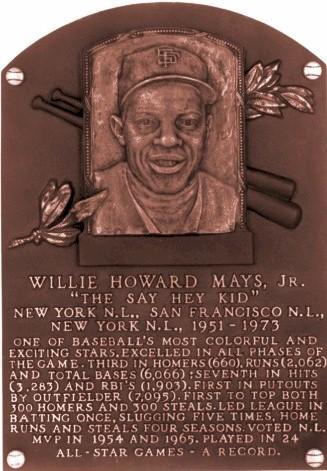

Willie Mays: Why is Willie wearing a San Francisco cap on his plaque? Mays started in New York, and he closed his brilliant career in New York, playing a couple seasons – well, 14 of them – on the West Coast. The Hall could have made both Giants and Mets fans happy by using a New York Giants cap, which, of course, bears a striking resemblance to the Mets cap. But no, Metsies are given the short end of the Hall stick. I’m not a big conspiracy guy, but this happens a lot, as you will soon read.
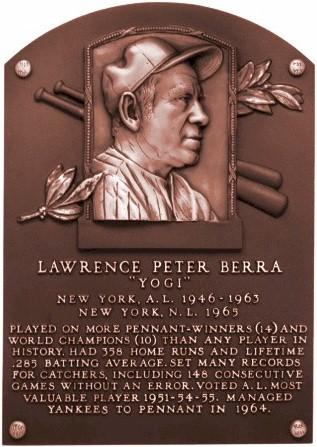

Yogi Berra: I’m fairly confident Yogi is rightfully wearing a Mets cap on his plaque. You just can’t see it -- another slight! And I can’t blame him for dissing the Yanks after the way the team treated him. Yogi played his entire career in pinstripes, became their manager, took them to the World Series in his first year as skipper and they went and fired the guy. So the Mets brought him over, coaxed him out of retirement for four very important games in 1965 and put him at the helm when fatherly Gil Hodges unexpectedly dies. Of course, Yogi took the Mets to the series, too. Now, look at his plaque: “Managed Yankees to pennant in 1964.” Hello! What are we forgetting? Who’s writing this stuff, Bob Klapisch and his Yankee apologist buddies? I know, I know, Yogi was elected to the Hall in 1972, before the 1973 “You Gotta Believe” team. But that’s what happens when you start adding managerial stuff to plaques when a guy is still managing.
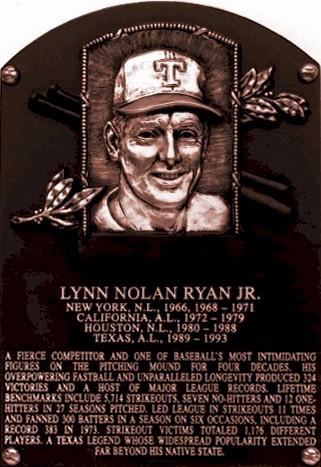
Nolan Ryan: Another clear example of the Mets not getting the love. Ryan pitched five years for the Mets, the same number as he did for the Rangers. His tenure with the Mets is best remembered for a win in the first-ever NLCS and a fine performance in the World Series, earning the only ring of his 27-year career. Meanwhile, his time with the Rangers is remembered for bitch-slapping Robin Ventura. And we have to keep in mind that the Mets made the ultimate act of charity by giving Ryan to a poor, struggling Angels team in search of an identity. For all that, we don’t even get a mention in the text of his plaque. I could forgive the non-reference if he was at least donning that classy interlocking NY on his plaque cap.
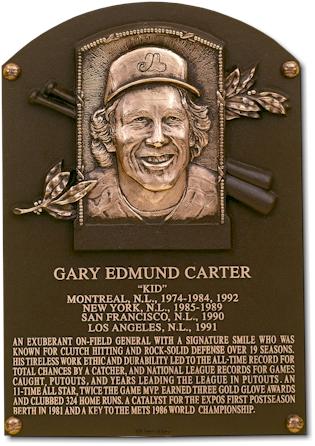
Gary Carter: The Expos' abstract logo is hard enough to figure out when it's in color. But in bas relief on a plaque? Forget about it! I can picture a young fan in the not-so-distant future admiring the plaques of baseball's heroes and saying, "Daddy, why does this guy have a moose footprint on his cap? Isn't this the guy who started the Miracle of Game Six with a base hit?" The father will say, "Well, son, it is true that Gary Carter is known as a Met and even wanted to go into the Hall as a Met. But the people running baseball were feeling guilty for screwing up what was a great team in Montreal through a series of inept owners, including the commissioner. Yes, he owned even another team at the time. Sometimes that's called a conflict of interest. But we can read about that on his plaque. I think he's wearing a Yankee cap. Anyway, the guilt-ridden people running baseball wanted proof that the Expos existed, so they strong-armed the Hall into putting the Montreal logo on the cap."

There you go. I have issues with the plaques of Richie Asburn, Warren Sphan, Casey Stengel and Eddie Murray, but you see the devious tend at work here.

Luckily there's still time for us to start pressuring the Hall for the proper cap to be proudly displayed on the plaques of Rickey Henderson, Tom Glavine, Mike Piazza and Pedro Martinez.

In other words...

Speaking of Pedro, he's only the latest Mets pitcher to have a no-hitter foiled. The guys at Faith and Fear in Flushing have a great article about the rogue's gallery of dream-killers here.

Friday, August 12, 2005

Ballpark Ghosts: The Met and the Mall


All that remains of Metropolitan Stadium, former home of the Minnesota Twins.


Imagine a ballpark so bad that a domed, plastic-grassed multipurpose barn was an improvement.

Picture a ballpark so woebegone that tearing it down and replacing it with a mall was actually a pretty good idea.

We can only be talking about Metropolitan Stadium, home to the Minnesota Twins from 1961 to 1981.

I was visiting Minneapolis for an education writers conference in 1996, and used some free time to wander over to the Hubert H. Humphrey Metrodome. The Twins were on the road, but I was hoping to check out a gift shop.

I got even luckier.

I walked in and an employee asked "Are you here for the tour?"

"Why yes. Yes, I am," I replied, thinking quickly.

"They just started." the employee said. "You can catch up with them."

Sure enough, a group of kids — they might have been Cub Scouts — was there on some kind of field trip. I think the other dads thought I was a chaperoning parent who they hadn’t met yet. I tagged along in the rear of the group. No one asked who I was, and I didn’t volunteer information other than some small talk like, "Hey, they kids sure are enjoying the tour. This was a good idea." A good adventure always has risk.

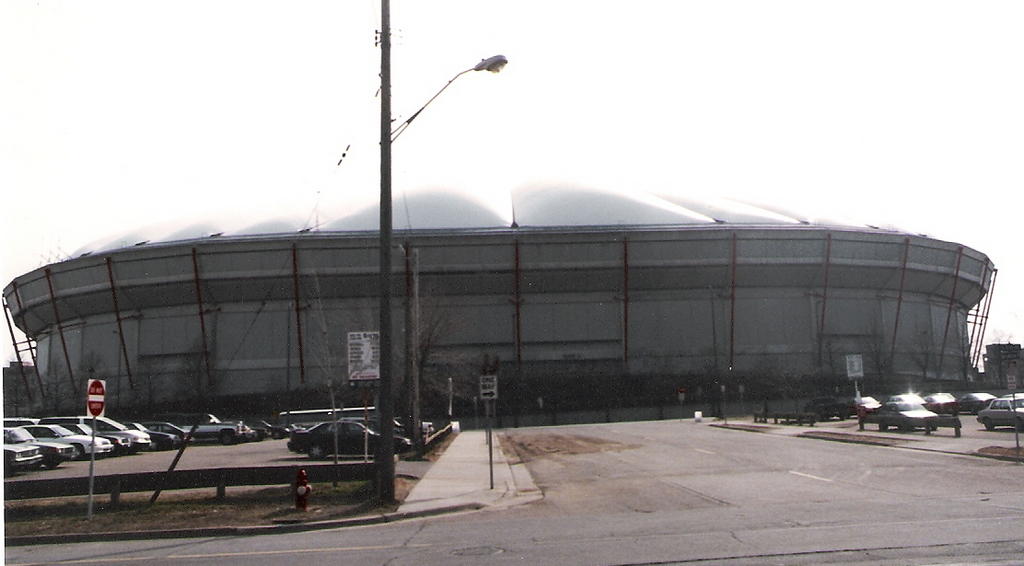
The Hubert Humphrey Metrodome, not the nicest-looking ballpark.

We walked through some of the luxury boxes and some of the service corridors. The clubhouses were off-limits, but we were able to go out on to the field.

A college football team was practicing down one end of the turf, but we were allowed to wander around right field. Some of the kids and I had fun pretending to make Kirby Puckett-esque catches against the "Hefty bag" that serves as the outfield wall. A massive Dodge ad seemed to stretch from the foul pole all the way to centerfield.

I was struck by just how cavernous the place was. The team made some half-hearted attempts to dress it up with some banners of players hanging along the roof. And there was no hiding it’s multi-purpose-ness.


It didn’t seem like it was a particularly nice place to see or play a game, though there’s no denying the Twins have enjoyed some success there.

Of course, after reading about where the Twins used to play, the Metrodome seemed like paradise.

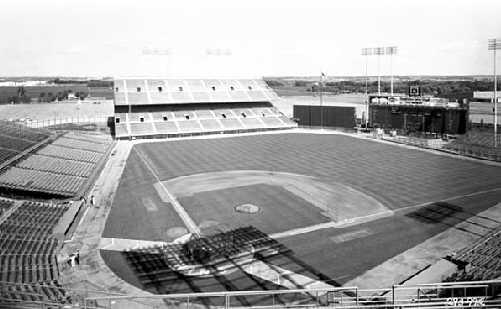
Metropolitan Stadium was built for the Minneapolis Millers of the minor leagues in 1956, but it was clear it was intended to lure a Major League team. It had a curved, triple-decker grandstand stretching from first base to third, and some temporary bleachers.

The Washington Senators arrived and were renamed the Twins in time for the 1961 season, and the first and second decks of the grandstand on the first base side were extended down the left field line. But for some reason, only better bleachers were added along the right field line, creating what I’m assuming were some horrible sight lines.

What was already a hodgepodge became even worse when the Vikings football team added a double-decked pavilion in left field, kind of an early version of the disaster in Oakland where the Athletics and Raiders share a stadium.

Given all these issues, it wasn’t long before there was talk of leveling the stadium, with the usual debate about who would be picking up the tab. Apparently maintenance was scaled back to accelerate the pace, and it got so bad that in the ballpark’s final season the third deck was considered a safety hazard because of broken railings.

But a bad setting doesn’t always make for bad baseball. The Twins went to the World Series in 1965 and took the division crown in 1969 and 1970. Zolio Versalles earned an MVP and Jim Perry a Cy Young. Hall-of-Famers Harmon Killebrew and Rod Carew played at the Met, along with Jim Kaat, Tony Oliva and Bert Blyleven, players who still get strong Cooperstown consideration.

Metropolitan Stadium was leveled in the early 1980s to make way for the Mall of America, which I learned is only a $1 bus ride away from downtown Minneapolis. I had some time after to conference ended and caught the bus, curious to see if anything remained of the stadium.

The mall itself is not especially exciting. It’s pretty much the same stores you see in every other mall — just more of them — with a small theme park in the middle.

A Camp Snoopy employee pointed me to a plaque in the floor that rests in the approximate location of home plate.

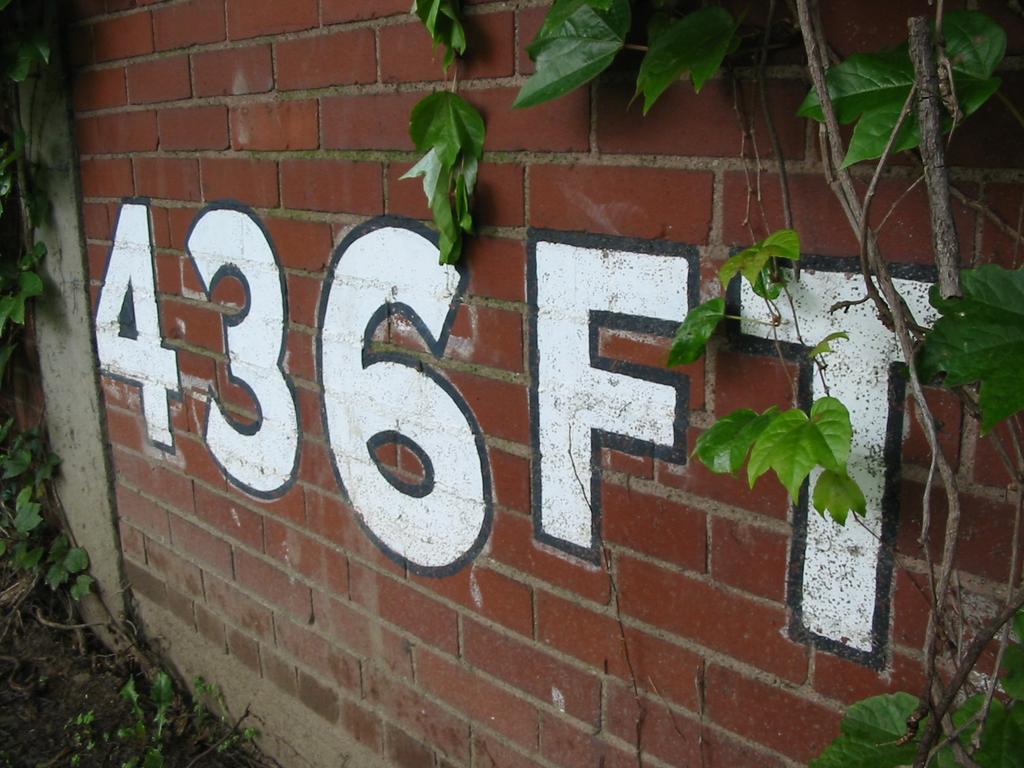
And high on a wall sits a stadium seat — with no way to get to it. That’s the spot where Killebrew hit the longest home run in Metropolitan Stadium history, a 520-foot blast on June 3, 1967.

In Other Words...

There are two Web sites, www.ballparks.com and www.ballparkwatch.com that I find to be awesome resources for stadium histories.

Tuesday, August 09, 2005

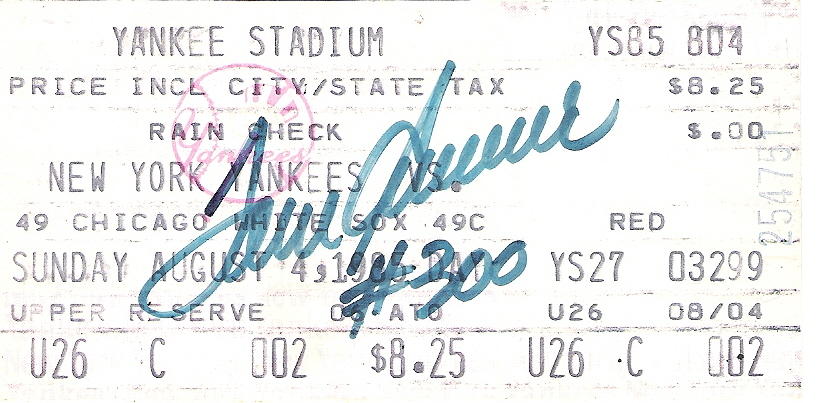
The Forces That Heal: Tom Seaver's 300th Win


You just know there are cosmic forces at work in baseball.

Usually the forces show their hands with a foul ball to Steve Bartman or a slow roller to Bill Buckner, keeping ancient storylines alive.

But sometimes the forces work to heal. I submit Aug. 4, 1985, twenty years ago this month, as proof.

If M. Donald Grant stabbed Mets fans in the heart by trading Tom Seaver to the Reds in 1977, losing him a second time in 1984 was like taking the wounded pump and throwing it out on the tracks in front of the No. 7 train.

Back then, teams that lost a player through free agency were allowed to compensate by selecting from a pool of unprotected players from each of the other teams.

The Mets, with a rotation of decent starters and Dwight Gooden on the horizon, figured no one would take an icon with a 9-14 record.

Wrong. The White Sox lost pitcher Dennis Lamp to the Blue Jays, they picked Seaver from the pool.

I didn’t take this well.

Just a hunch, but I think I was the only community college newspaper editor in the country to direct his cartoonist to take general manager Frank Cashen to task.

Tom pitched well in Chicago over the next season and a half and I closely followed his march toward 300 wins. He aimed at No. 299 against the Red Sox on July 30, and a win there would mean he’d get to go for the historic milestone in New York, where he never should have left.

Here’s were cosmic forces come into play. Seaver pitched nine innings in a 4-4 tie. But the Chisox threw three runs on the board atop the tenth to get Tom the win.

The next day, my dad bought tickets so the entire family could make our first trip to Yankee Stadium. I was beyond thrilled, and it was appropriate that we could experience it together. Lord knows my folks suffered through my devotion to the Mets and Seaver over the years. And I was leaving for the University of Missouri in a couple weeks, and this would be a meaningful send-off.


Sadly for the Yankees, the team had selected that day to honor Phil Rizzuto, retire his number and throw another plaque up in Memorial Park. Because you know, Ruth, Gehrig and the Scooter…all cut from the same cloth. Whatever.

Rizzuto never had a chance. As he was being showered in trips and golf balls, Tom tried to slip down to the bullpen to get warmed up. That’s when the chanting shouted, “SEA-VER…SEA-VER” cascading down from the upper deck.

“I’m sorry, Mr. Seaver, but you’re going to have to get your win in another city,” Rizzuto said in his remarks. Whatever. Phil then got stepped on by a real cow with a fake halo, which is about right.

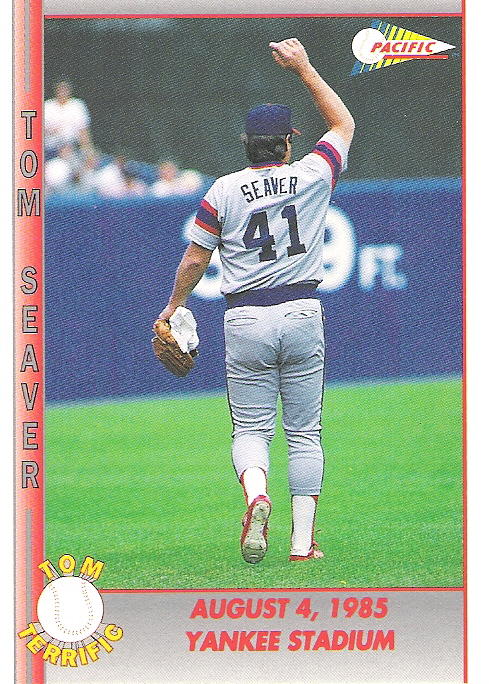
The game went by like a blur. The Yanks stepped out to an early lead. Several times, “Let’s go Mets” chants broke out -- probably for the first time ever in that yard. The White Sox sent four across in the top of the sixth. The Yanks threatened in the eighth and the ninth, but the baseball forces were clearly determined to right a wrong.

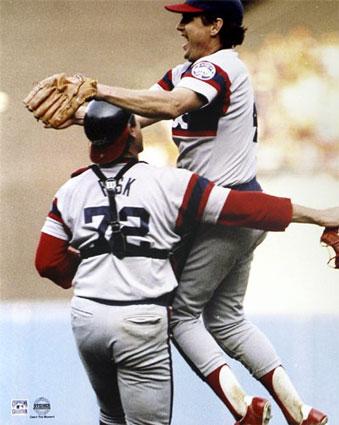
The stadium erupted as Don Baylor, the home team’s slugger, flied out to Reid Nichols, just below our seats out in left. I can still see Seaver jumping into the arms of fellow future Hall-of-Famer Carlton Fisk, then running to the stands to his family while I hugged members of mine.

I’ll never forget the chills and the tears of that sunny afternoon. The uniform might have read SOX, but I didn’t see it. For a day, M. Donald Grant’s spiteful banishing to Cincinnati didn’t happen. For a day, the front office didn’t make the mistake of not protecting “The Franchise.” For a day, he never left and claimed his historic win before the fans who would enjoy seeing it the most.

Do you believe? The final score that day was 4-1, the same as the uniform number that would eventually be retired at Shea. Over in Chicago the Mets were playing the Cubs and Dwight Gooden won his 11th straight game. The score in that game: 4-1.

And give Tom credit for taking care of business, pitching a complete game. Will, me and the rest of the BaseballTruth.com Executive Board were in Detroit the day Roger Clemens made an attempt at his 300th win. He was pulled in the sixth with a 7-1 lead, only to have the Yankee infield kick the ball around and allow an historically bad Tigers team to tie the game. He lost his next game to the Cubs, and only lasted 6.2 innings in the game against the Cardinals when he eventually reached the milestone.

Perhaps it wasn’t Clemens’ fault. He didn’t have the cosmic forces on hand to mend wounded hearts.

In Other Words...

Three Hall-of-Famers played in that game, another -- Rickey Henderson -- is a lock to be a first-ballot inductee. Which active players will join them in Cooperstown? Will analyzes their chances this week on BaseballTruth.com. You can read it here. The Hall-of-Famers were Seaver, Fisk and Dave Winfield. Two guys who fall just short -- Harold Baines and Don Mattingly -- played, as well as future managers Baylor, Ozzie Guillen and Willie Randolph.
Thursday, August 04, 2005

Every Signature Tells a Story: "Double Duty," "Peanut" and a Lesson Learned

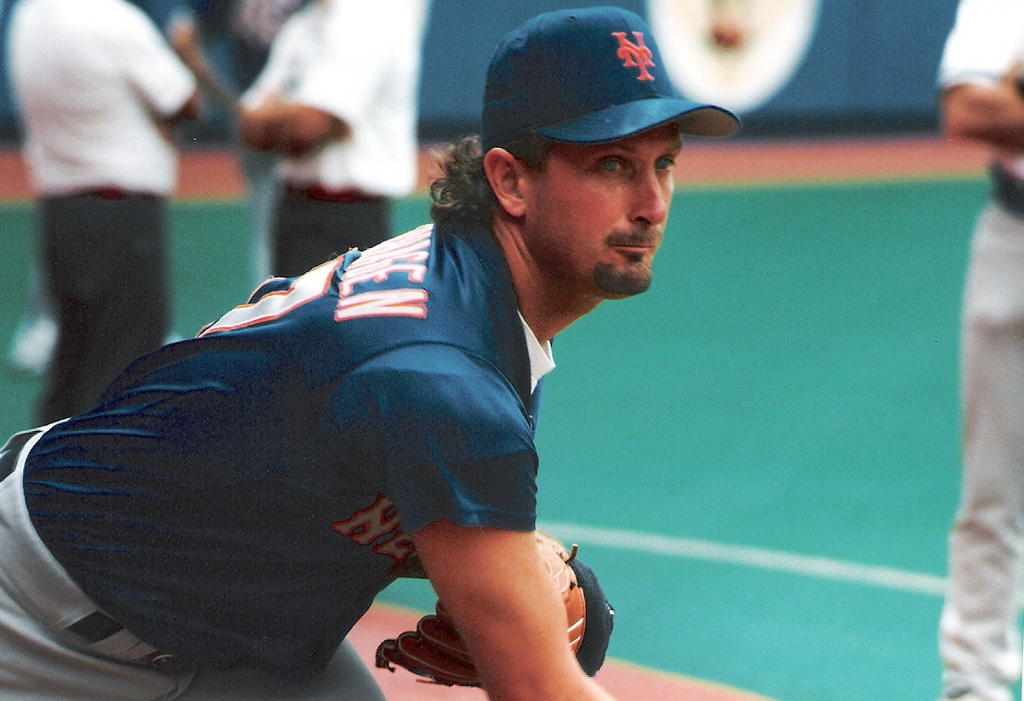
Tigers pitcher Mike Henneman in his Detroit Stars uniform.


Sometimes I think I know a lot about baseball history.

Sometimes I’m embarrassed by what I don’t know.

I was excited when I heard the Detroit Tigers would be honoring Negro League players by wearing Detroit Stars uniforms for a July 8, 1995 game. They were playing the Kansas City Royals, who would be wearing the Kansas City Monarchs road grays, modeled below by Wally Joyner. The team is playing a similar tribute game this weekend.

And I was even more excited that some of the Negro League stars would be on hand to sign autographs. Historic uniforms and free autographs – that’s all good. I have a lot of respect for these players. I never will be able to imagine how frustrating and hurtful it must have been to be prevented from playing in the Major Leagues because of their race.

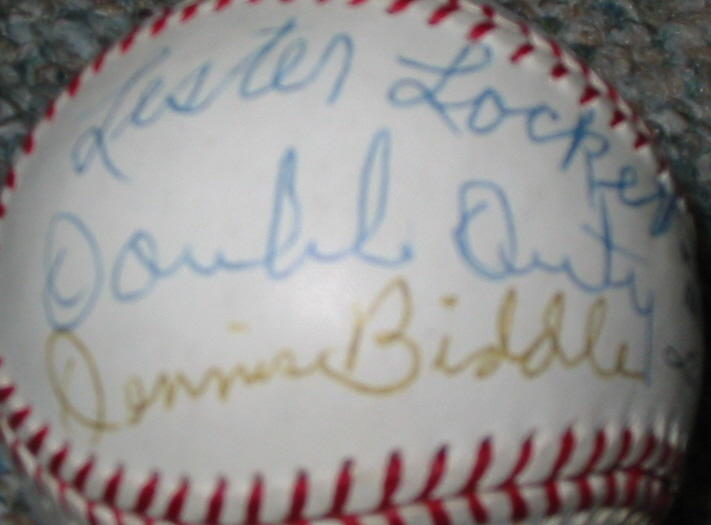
Will and I arrived early and hopped on the line where Ted “Double Duty” Radcliffe, Lester Lockett and Dennis Biddle were signing; all were in good spirits and sharing stories about their playing days.

There was a woman sitting behind the table, too. Some people were asking for her autograph, which I thought was strange. I didn’t know if she was a player’s wife or an assistant. We made polite small talk while waiting my turn to pass a ball to the next player.

Signatures secured, we slipped down to the field to watch batting practice and snap some photos of the players in their Negro League uniforms. One of things I enjoyed most about old Tiger Stadium was that you could get right down near the field.

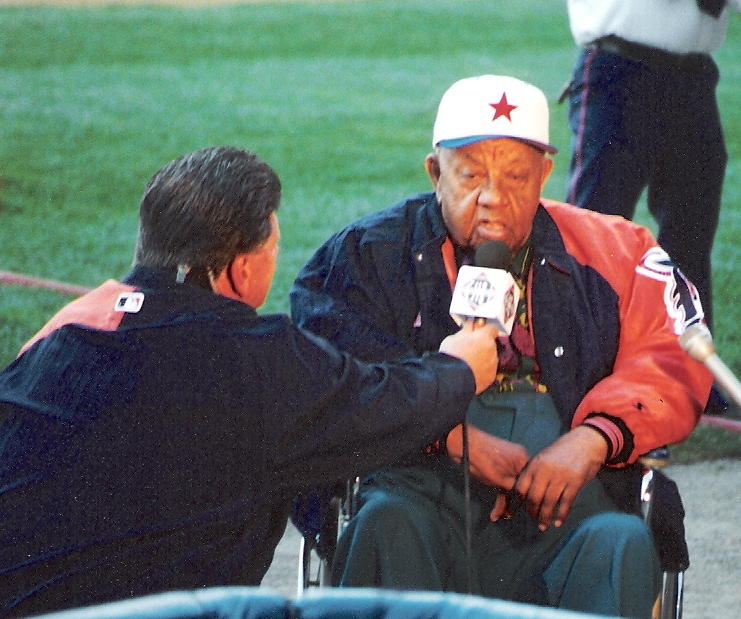
Before long, “Double Duty” was brought on to the field for some television interviews. He was 93 then, and celebrated his 103rd birthday in July and passed away Aug. 11.
Ted "Double Duty" Radcliffe interviewed before the game. He passed away Aug. 11.


Before the game, the Tigers brought each of the Negro Leaguers out on the field, and I noticed the woman walked out with the rest.

The Tigers announcer introduced her as Mamie “Peanut” Johnson, one of three women to play in the Negro Leagues in the 1950s.

Will looked over and said “Oops!”

I was deeply embarrassed, exposed as both ignorant and sexist in one swoop.

Later I did the research. Johnson -- a right-handed pitcher -- and teammates Toni Stone and Connie Morgan played for the Indianapolis Clowns. Johnson posted a 33-8 record and credits Satchell Paige with helping her with her curve ball.


She was called "Peanut" after Monarchs third baseman Hank Bayliss came to bat against her and called out “You're nothing but a peanut!” Johnson struck him out and the name stuck.

Remember that scene in “A League of Their Own” when the black woman picks up and overthrown ball and whips it back on to the field? That’s homage to Johnson, who was turned away from a tryout when All American Girls Professional Baseball League would not allow black women to play in the all-white league.

Johnson taught me a lesson that day, and she’s still teaching, speaking about Negro League history around the country.

The other players I met that day also have interesting stories. Radcliffe got his nickname in the 1932 Negro League World Series, when he caught Satchel Paige in the first game of a doubleheader, then pitched a shutout in the second game.


Biddle, who pitched for the Chicago American Giants, tied Bob Feller’s record of winning five games as a 17-year-old in 1953, turned 18 and won 10 more. He injured his arm and was out of the game by 19. Today he is an executive with the Helmar Brewing Company.

Lockett played during the 1930s and 1940s with the Birmingham Black Barons, Philadelphia Stars, Cincinnati Clowns, Chicago American Giants and the Baltimore Elite Giants, hitting more than .400 twice.

I humbly apologize to Mrs. Johnson, and if I ever have the opportunity I’d be honored to have her sign my Negro leagues ball.


In Other Words...

Greg at the always interesting Faith and Fear in Flushing site has a great article about how he is finally thinking about Tom Glavine as a Met and not some former Brave parading in a Mets uniform, almost forgiving him for his Atlanta misdeeds. You can read it here.

Monday, August 01, 2005

Off-the-Wall Mets Treasures are Part of the Fun


Some of the fine relics Will and I saw at the National Sports Collectors Convention in Chicago last weekend were valued at thousands of dollars — hundreds of thousands in the case of the famed Honus Wagner card that was on display.

But my favorite purchase of the day set me back a whole buck.

See, while I can appreciate the expensive stuff, I'll never afford it. Luckily, I've developed a fondness for the strange and the fun, the off-the-beaten-trail treasures you usually find in the bargain bins.

I’m talking about items like my new Mets outlet cover.

Hey, anybody can walk out of there with a Startling Lineup figure. Lots of dealers were selling them. But I also like the stuff you come across once in your life.

This particular treasure was in a box in front of a table stacked high with McFarlane sports action figures, which are amazing. But I cheered when I pulled out the outlet cover, about as loud as I did when Will found the affordable stack of 1971 Topps high numbers.


It’s just too strange. Think about it. I’ve seen Mets switch plates before, and that makes sense. Light switches are in visible places. But outlet covers? I usually hide them behind the book shelf.

And that’s what makes it cool.

There are a bunch of wonderfully off-beat items decorating my basement baseball room, from the Mike Piazza yo-yo to the Tom Seaver super-ball.
There are even some semi-useful things, like the Mets logo salt and pepper shakers, the Gil Hodges coasters and serving tray and the Tom Seaver Action Baseball game, where you hit a marble and it rolls into different slats. All are fun, all are on display.

Then there are the "what in the heck were they thinking" things. Those are the classics.

Clearly some company paid the Major League Baseball properties licensing fee, then wasn’t quite sure what to do with it.

Here are some of my favorites:


The Mets fly fishing lure: What can you catch with this? Marlins, of course.

The Mets toothbrush: It’s shaped like a bat, and hangs in a little adhesive-backed stand with the logo.

The Mets bike reflector: You gotta keep safe biking home from night games.

The Mets pocket radio: This might be able to pick up “Mike and the Mad Dog” — if I was standing right next to the transmitter.

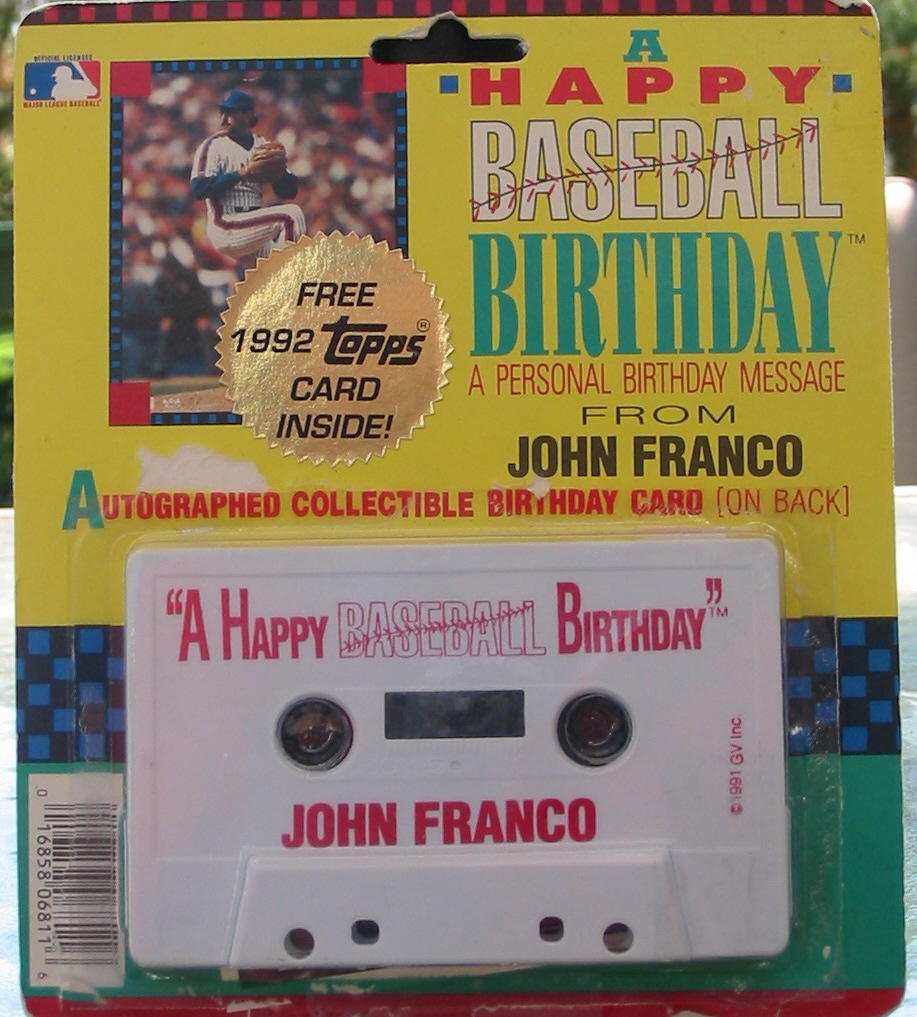
The John Franco “Happy Birthday” greeting: This is a cassette where Franco reads a generic birthday greeting, then shares a baseball memory. It’s fun, it’s in his own voice and I’d love to get it on my iPod somehow.


Other than the Franco tape — which I just had to hear — I don’t know if these work. I keep them in their package and hang them on a cork-covered wall in the basement with the Mets subway ads, player buttons and other glorious relics.

The best head-scratcher in the bunch isn’t actually a Mets item, but it’s still amazingly cool.

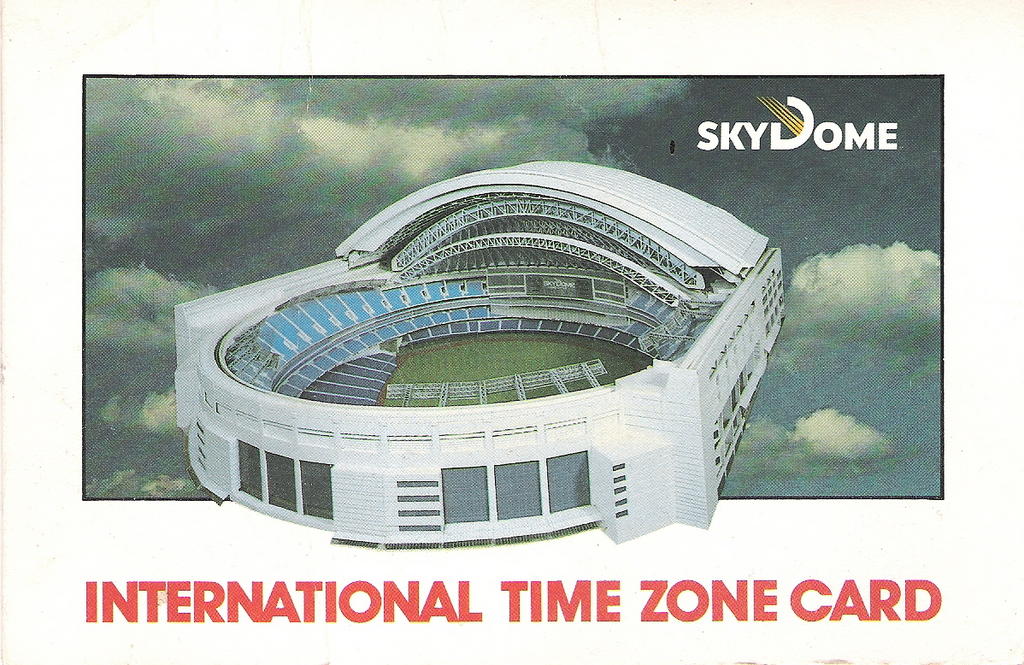
It’s an official SkyDome international time zone calculator. There’s a photo of the stadium on the front, and when you open it up there’s a map of the world with the time zones and a little wheel so you can calculate what time the game starts when the Blue Jays are in Seattle. Or Asia.
So keep the Honus Wagner card. I’d rather save space for my new outlet cover.

In Other Words...

One of the best things purchased at the National was “The Fenway Project,” published by the Society of American Baseball Research. SABR collected 64 stories of Fenway for the book, including one from Will that starts on page 35. We’ll have complete coverage of the convention at BaseballTruth.com.

Friday, July 29, 2005

Every Signature Tells a Story: Johnny Ramone, Card Collector


I was using a pay phone to let my wife know all was well at the card show I was attending in one of those huge piers on the Hudson when a familiar figure in a leather jacket walked past.

I almost dropped the phone and I'm pretty sure my jaw dropped open.

"Yeah, it's him," assured a guy walking not far behind Johnny Ramone, guitarist in the seminal punk rock band.

Ramones collect baseball cards too?

"Honey, I gotta go."

My buddy Rich introduced me to many important things during my three years in Connecticut, from the glories of Fenway Park to how to survive in a mosh pit. And of course, the Ramones.

We're talking a true friend here.
I was familair with a handful of the band's songs -- it was impossible to go to college in the 1980s and not hear some of them -- and had even seen them in concert once, a horrible mismatch of a bill when they opened for the B-52s in the Hofstra University field house.

All wrong, as Rich pointed out. Forget the records, you have to hear the Ramones live. And it's got to be in a small, sweaty club -- like Toads, in New Haven, where we saw them several times.

We admired the Ramones' musical philospohy: Get up on stage, say what you gotta say and get the heck out of there. If you can get a song out of the way in under three minutes, good. Under two minutes? Even better. Loud and fast, and don't look too closely for meaning in the lyrics. Guitar solos are for posers and stage banter other than onetwothreefour! is unnecessary.

It especially made sense when we saw AC/DC at the Hartford Civic Center and Angus Young spent about 20 minutes preening on the edge of the stage for was was supposed to be a solo. I remember thinking that the Ramones would have ripped through 10 songs during that same amount of time.
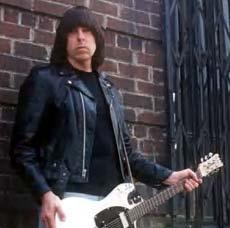
So there, walking among the dealer tables was Johnny Ramone, dressed exactly as he appeared on stage with ripped jeans and leather jacket.
He was just another collector with a card list flipping through commons bins.

I casually examined the stuff on the dealer's table until I got the nerve to say something.

"Are you Mr. Ramone?" I asked, immediately realizing how stupid it sounded. So much for being cool. His real name was John Cummings. Everyone in the band adopted "Ramones" as a last name.

He smiled and said he in fact was. I stammered something about how I had recently seen the band at Toads and that I liked their stuff.

He seemed genuinely friendly, humoring me a little and then said, "Would you like an autograph?"

Whoa! This was an opportunity. I couldn't give him a spot in my Mets history book, so I offered the only other thing I had, my reporter's notebook where I recorded my want list.

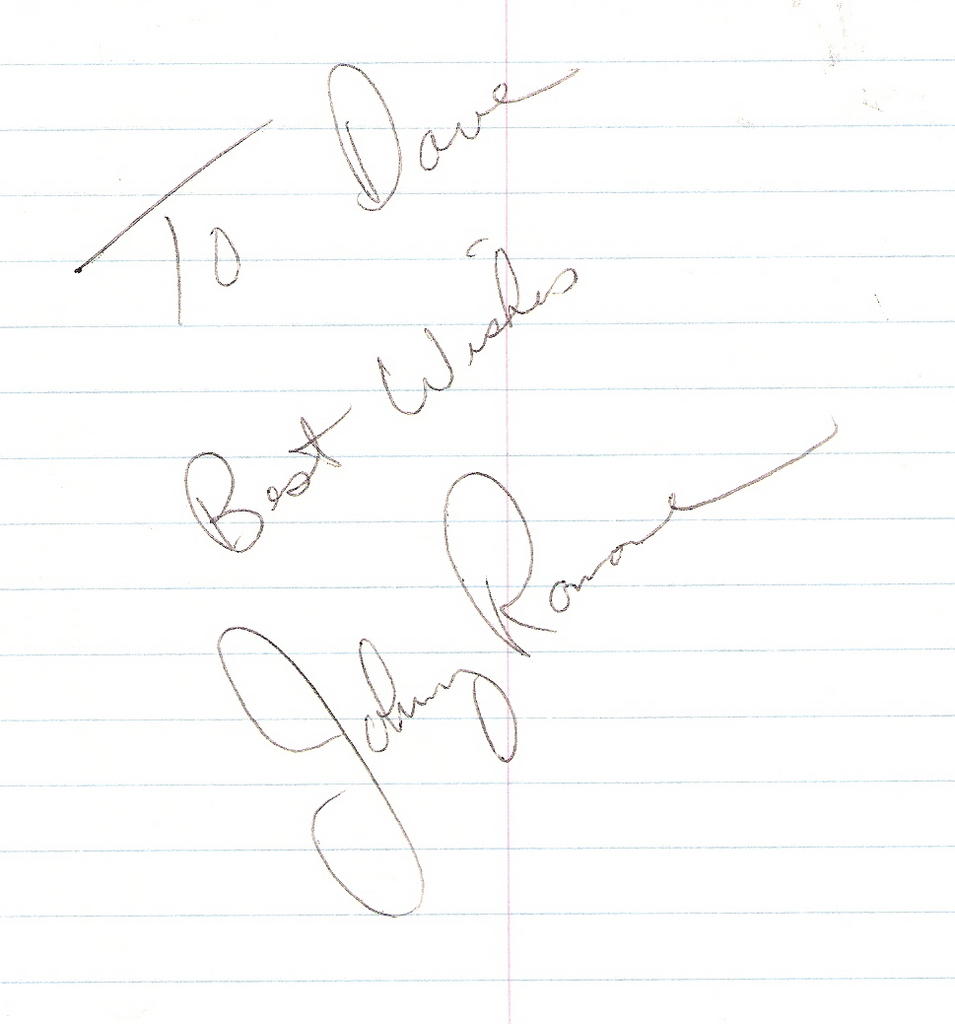
He asked my name, and even added "best wishes."

I thanked him and ran off. An encounter with a Ramone shouldn't last longer than "Blitzkrieg Bop."

I was at the show to get autographs from a good chunk of the 1969 Mets team, and they were neat. But I might have had more fun meeting Johnny.

Johnny died Sept. 15 of cancer, just after being inducted in the Rock and Roll Hall of Fame. I'm still a fan -- a lot of Ramones songs take up very little space on my iPod.


In Other Words...

Derek Jeter overrated? Hey, don't take my word for it. Michael Hoban is professor emeritus of mathematics at City University of New York and a serious baseball analyst. Check out his latest article at BaseballTruth.com located here.

Monday, July 25, 2005

Ballpark Ghosts: Forbes Field, Where Yankees Wept


Any place where Yankees are humbled -- and goodness knows we need more of them -- is considered hallowed ground in my eyes.

So I was pretty excited when Will suggested we pay a visit to the site of Forbes Field before a recent trip to PNC Park in Pittsburgh.

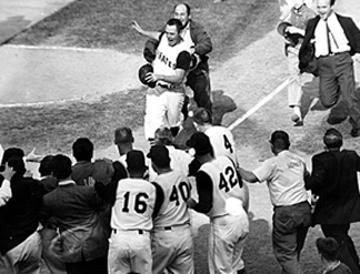
Forbes, of course, is where Bill Mazeroski earned his Hall of Fame plaque by driving a stake through the Yankees' black hearts, winning the 1960 World Series with a home run in the bottom of the ninth.

How much did this hurt the Yankees? Let's go right to Mickey Mantle's autobiography, "The Mick."


"Nothing ever hurt as bad as that one.....Bottom of the ninth. Bill Mazeroski is at the plate, taking the first pitch, a high slider....And the most tearing moment of all, seeing Mazeroski's hard line drive heading for the left field wall. Yogi moves toward it, me backing him up, but it keeps going, going, going....There's a sick sensation in the pit of my stomach. There's that unforgettable look on Yogi's face when he turns around, grim acceptance, expressed by a slow shrug of his shoulders.


"We walked off the field, a mob of fans already streaming past, and as Mazeroski crosses the plate his hysterical teammates grab at his uniform.

"In the locker room, all of us are wandering around in a trance, muttering, 'What happened?' I'm slumped in a stool, feeling so low I can hardly peel off my uniform."

Now that is something to savor. The problem with the Yankees, well, one of them, is that they think they are entitled to all the World Series championships, not just an occasional or even frequent trophy.

And the 1960 loss was so traumatic that the team fired legendary manager Casey Stengel two days later and raided their farm team -- err, American League rival -- Kansas City Athletics for Roger Maris.

The Pirates played their last game at Forbes in 1970 and gave the site to the University of Pittsburgh, which had the good sense to know that it was treading on sacred ground.

A good chunk of the outfield wall remains carefully preserved, ivy and all, as well as the centerfield flag pole, which was in play.

Home plate rests almost exactly where it was, but it is encased in glass in a first-floor hallway of Posvar Hall, an otherwise drab building.

A row of bricks outside traces where the outfield wall stretched, and there's a plaque at the spot where St. Maz's ball crossed the fence, so all right-thinking fans can stand and reflect.

I caught up with Will and his brother Scott at outfield wall, which is slightly covered by trees in a nice, park-like setting.

After posing with home plate, we opted to pay homage by playing catch in what was rightfield, where Roberto Clemente once patrolled.

Forbes, which had been home to the Pirates since 1909, also was the site of Babe Ruth's last three home runs on May 25, 1935.

But it was Maz's blast that elevated Forbes to hallowed status. We remarked that 45 years later, the you could still catch a scent of Yankee shame lingering in the air. Of course, it had just poured buckets and all the trees were in bloom, which might have had something to do with it. But I prefer the former.

While the team's next ballpark, Three Rivers Stadium, was a multi-purpose concrete disaster, I'm pleased to report that PNC is a worthy successor. It's an intimate yard with an awesome view of downtown and its yellow bridges, easily the best of the new ballparks I've visited.

The view of downtown from our seats, where we enjoyed watching Chipper Jones take the collar -- with three strikeouts!

In Other Words...

We were in town to kick off the BaseballTruth.com annual Executive Game weekend. Will detailed all our adventures -- and we have many -- on his site, which always is recommended reading.

Thursday, July 21, 2005

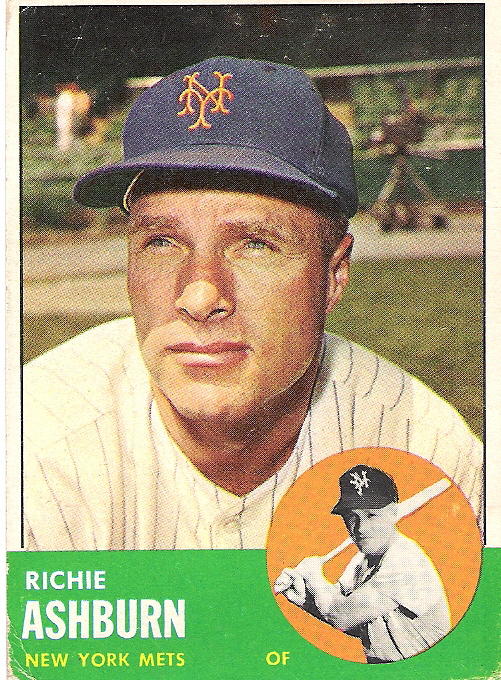
Every Signature Tells a Story: Richie Ashburn, Frank Thomas and Coed Softball


I sure can’t blame the other outfielders on The Grand Rapids Press coed softball team if they want to wear football pads when they play along side me.

We’ve had a couple issues with collisions this season.

One of the complexities of the seemingly simple slowpitch coed ball is that you don’t want to appear to be a ball hog, which inherently implies that you don’t think the women teammates can make the plays.

So the other extreme tends to happen, where you hang back and don’t go after balls that you probably should catch. You get points for being a gentleman -- but those are not reflected on the scoreboard.

That happened once this season, and a ball that both a teammate and I each of us could have handled dropped in for a hit. In the next game, I assumed a ball was mine and April — trying not to repeat the prior incident — ran right into me. Luckily, she wasn't hurt, though we got a lecture about calling for the ball.

But two games later there was a gapper that both Gayle and I went charging for. This time I called it, but I don’t think she heard me. Wham-o! We collided at full speed, Gayle’s knee into my thigh.

I gimped off the field -- I think more embarrassed than hurt. Gayle toughed it out and stayed in the game. But later her knee started swelling up, and after a trip to the doctor learned she ruptured something, leaving her with a dark purple brusie that stretches from her calf to lower thigh.

Naturally, I feel horrible. She's wearing some kind of brace and I cringe when I see her limp across the newsroom.

But the crash reminds me of my favorite story about the 1962 Mets. It’s told wonderfully by author Roger Angell in Ken Burns’ epic Baseball documentary.

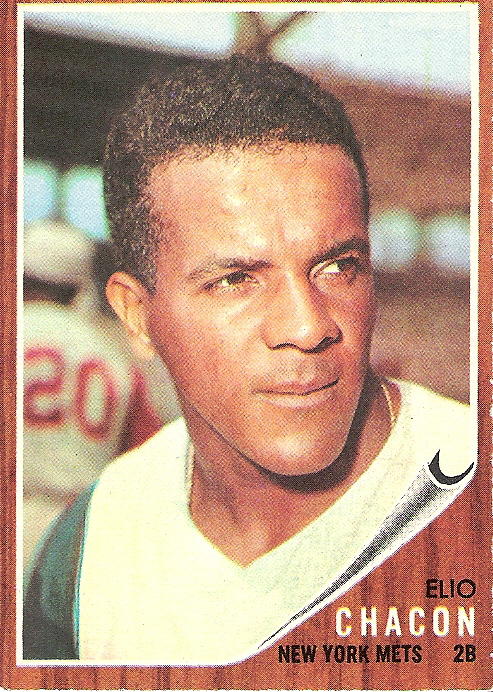
Centerfielder Richie Ashburn, a future Hall-of-Famer, was forever crashing into shortstop Elio Chacon, who didn’t speak English and didn’t understand when Ashburn was calling for the ball.

So teammate Joe Christopher pulled Ashburn aside and taught him some Spanish. “Yo lo tengo!” which roughly means “I got it!”

So the next time there was a fly ball between them, Ashburn put his new skills to the test, shouting “Yo lo tengo, yo lo tengo.” It worked perfectly, as Chacon backed off.

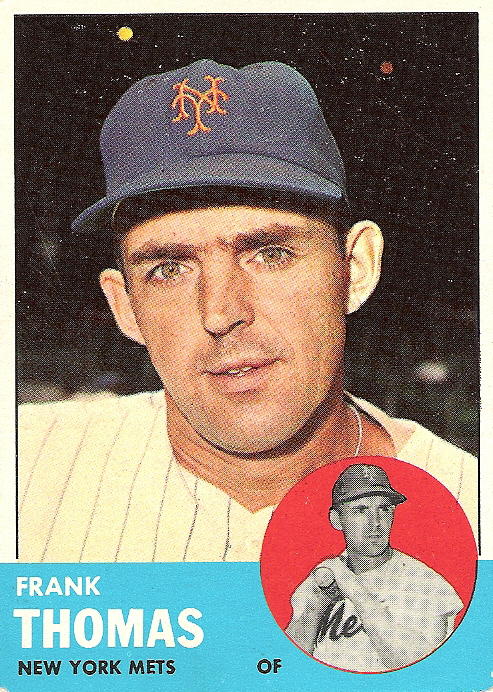
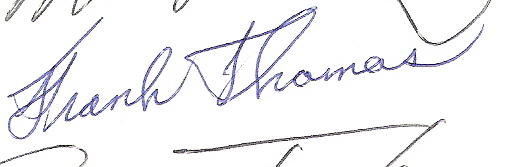
Except that Ashburn was then knocked flat by leftfielder Frank Thomas, who spoke no Spanish.


I was lucky to meet both Ashburn and Thomas at a card show in the late 1980s that featured a good chunk of the 1962 team, the original Mets.

Photo Updates

A little knowledge, of course, is a very dangerous thing. Now that I've learned how to add photos, I've gone back into some of the earliest posts and updated them. Here are links (which I've fixed, sorry about that) if you are interested:

Pop Shortell, Dave Winfield and Richard Nixon

Terry Nichols and the Rockies (Part One): Coors or the Keynote?

Terry Nichols and the Rockies, (Part Two): Wrangling for a Seat.

Wiffle Balls and the Meaning of Life

Tuesday, July 19, 2005

Busch Stadium Memories (Part Two): Sabes, the Unit and Reality

Two-time Cy Young Award winner Bret Saberhagen

Dreams die hard.

Sometimes reality comes ripping by you at 90 miles an hour. I came to this conclusion at Busch Stadium in 1995.

July 26, 1995: Cardinals 3, Mets 2

Will and I were in St. Louis for the National Sports Collectors Convention, and it just worked out that the Mets were in town. Naturally we were at Busch when the gates opened and hustled down to the box seats to watch batting practice.

But even better, we saw Bret Saberhagen tossing in the bullpen. Busch used to have the bullpens in foul territory along the stands, and you could get right up there and stand maybe 10 to 15 feet from the pitcher.

Saberhagen was really airing it out, and we were stunned by the velocity. The slap of the ball into the catcher’s mitt echoed throughout the empty ballpark.

It’s one thing to sit deep in the stands and watch a pitcher hurling from the mound. But it was another to stand just a few feet away and watch Saberhagen throw some gas.


"Sabes" was in his waning days as a Met.

After a couple throws we went down by the catcher to try to get a batter’s perspective. That was probably as close as we were ever going to get to standing in a major league batter’s box.

Again, we were amazed at how fast the ball came. We couldn’t understand how a batter could see the ball, judge where it would pass through the strike zone, decide to swing and actually move the bat through the zone in the fraction of a second it took for the ball to leave Saberhagen’s palm to reach the plate.

Could I hit Saberhagen's heat?

It’s a series of calculations and movements that have to occur in the blink of an eye — or less.

“At what point do you decide to swing?” Will said. “Is the ball still in his hand? Is he still in the delivery?”

We all harbor dreams that we could dig in at plate and get a hit one off these guys. That day I came to the conclusion that I wouldn't be able to make contact with one of Saberhagen’s pitches if I went up there with a piece of plywood instead of a bat.

We didn’t know it, but It also was one of the last times Saberhagen would appear in a Mets uniform. He was 5-5 with a 3.35 ERA in his fourth season with the team and was soon traded to the Colorado Rockies.

On the light side, you can always find something interesting and new at the ballpark. We noticed that a group of guys in our section would be cheering or groaning at the end of each half-inning, and it didn’t seem to be connected to the game. Journalists are nosey by nature, so we asked what they were up to.

Turns out at the end of an inning, the pitcher or the fielder who made the last out will throw the ball on the mound for the next pitcher to pick up. Sometimes the ball will stay on the dirt of the mound; sometimes it would roll onto the turf. These guys were betting on which would happen.
As for the game, the Mets came up short in the tenth inning, the fifth game of a six-game losing streak. We sensed it would be a long day when the line-up included the likes of Rico Brogna at first, Tim Bogar at short and Alberto Castillo catching.

Not only were Cardinals players better, I think their coaching staff would have polished off the Mets that day – it included Hall-of-Famers Lou Brock, Bob Gibson and Red Schoendienst.

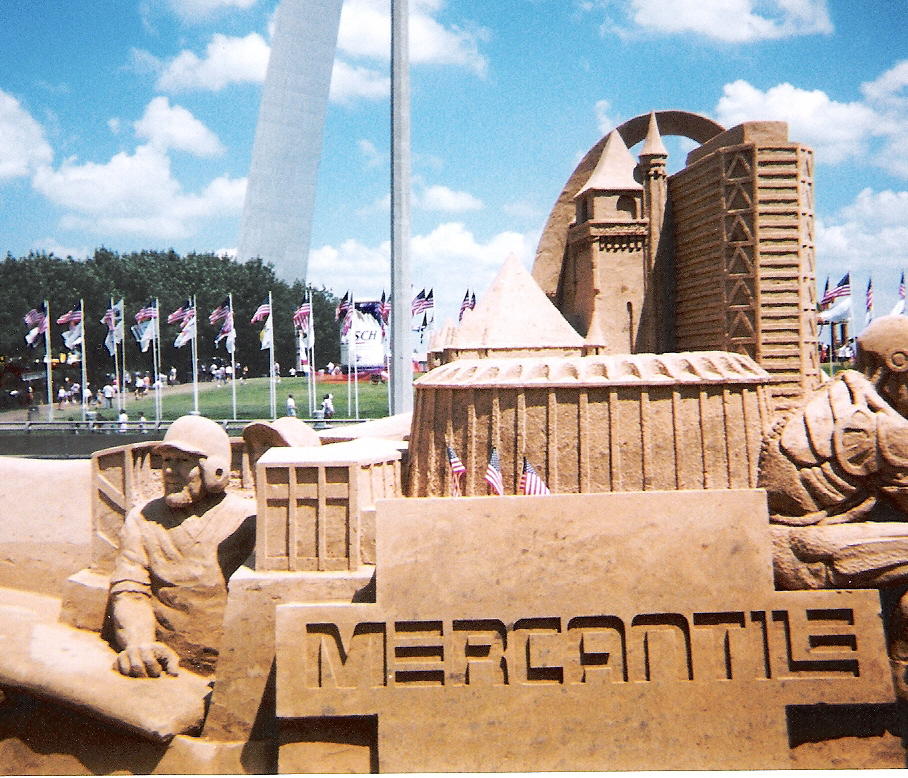
Big Mac and Busch Stadium in sand at Fair St. Louis.


July 5, 1999: Cardinals 1, Diamondbacks 0

This was probably the best-pitched game I’ve ever seen in person. And it jsut goes to show that you just never know what will happen in baseball.

This game should have been a rout, with studly Randy Johnson going up against Jose Jimenez, entering the game with an unimpressive 4-8 record.

The Big Unit performed as promised, throwing a four-hit, 12-strikeout gem. Sadly for him, Jimenez hurled the game of his career, holding the Snakes to two hits and a walk while fanning nine

The Unit, in his first year with Arizona, was enroute to the second of his five Cy Young Awards and led the league with 354 strikeouts and NL-best 2.48 ERA.

Jiminez, on the other hand, finished 5-14 and was shipped the Colorado the next season where he became a servicable reliever.

Both players threw complete games — something you never see — and Mark McGwire got one of the Cardinal hits and scored the game’s only run.

McGwire had bashed his 70 homers the year before and was the toast of the town -- as evidenced by his likeness shaped out of sand along with the city's other landmarks at Fair Saint Louis.

It was a swelteringly hot afternoon when my son Andrew and I made the trek from Illinois, where we were visiting relatives. But the fair was in full swing and we took part in some of the festivities and enjoyed watching military jets roar past the Arch as part of the the annual air show.

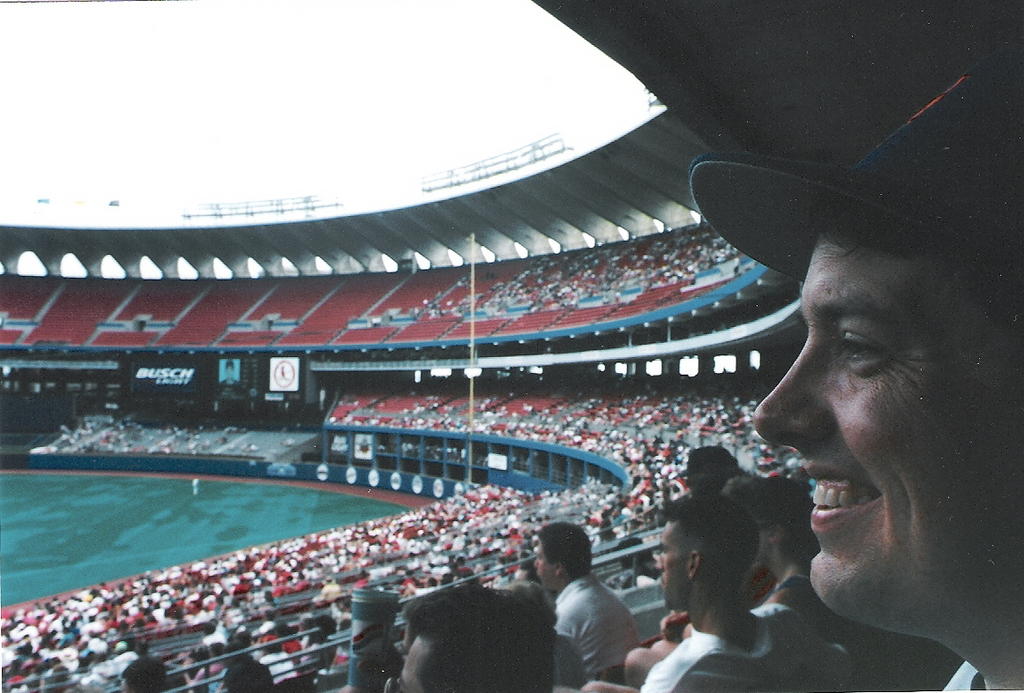
Taking in the view at Busch

In Other Words...

Bad Guys and Uniforms, Too: Blogging buddy Metsradamus is an excellent writer, and his recent post about an all-time team of Mets villains is both on the nose and wickedly funny. Check it out here.

Thursday, July 14, 2005

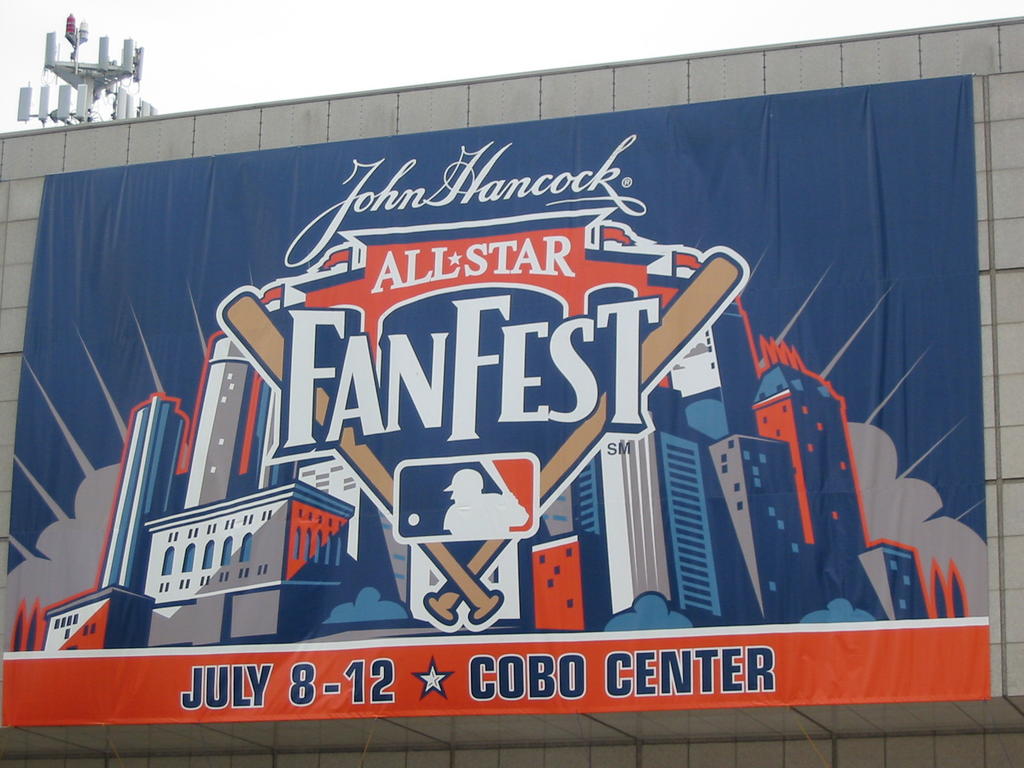
Haunted by Pinstripes at FanFest


Baseball’s All-Star FanFest is a glorious celebration of the National Pastime, and a must-attend event if the game is within driving distance.

So I happily motored two hours east to Detroit this week to bask in all that is good about baseball – and couldn’t escape the dreaded clutches of the Evil Empire.

Not that I let it spoil the fun. After all, any day spent immersed in the Grand Old Game is a good one, even if the Yankees are involved.

In case you’ve never been, the FanFest is a collection of baseball displays and activities that takes place in the weekend before the All-Stat Game in the All-Star host city, usually in some convention center. There are opportunities to meet everyone from Hall-of-Famers to professional softball players. It’s a collector’s paradise, and I’ll soon detail that aspect at http://www.baseballtruth.com/.

I’ve been fortunate to attend FanFests in Pittsburgh in 1994, Cleveland in 1997, Milwaukee in 2002 and Chicago in 2003.

I started the event by wandering into an area called FanFest Bazaar, which was filled with corporate sponsors, many giving stuff away. Dave Winfield was there at a booth sponsored by the Major League Players Alumni Association, posing for photos with fans. He wasn’t allowed to sign autographs, which MLB rules say can only happen in the designated “Legends” area.

After the whole Reggie Jackson ball-pounding incident, I’ve limited my contact with Yankees. Winfield, of course, has serious Yankee taint, and I had to think before posing.

I ran through a brief mental checklist.

A Yankee? For sure.

Number retired by Yankees? No.

Yankee cap on his Hall-of-Fame plaque? No.

Milestone achievement while playing for Yanks? No.

Plus I had a nice experience with Winfield that I blogged about before. And he departed the Yanks on his own terms and even indirectly led to Steinbrenner getting suspended for a while.

I figured it was safe, and Dave indeed was a nice guy.

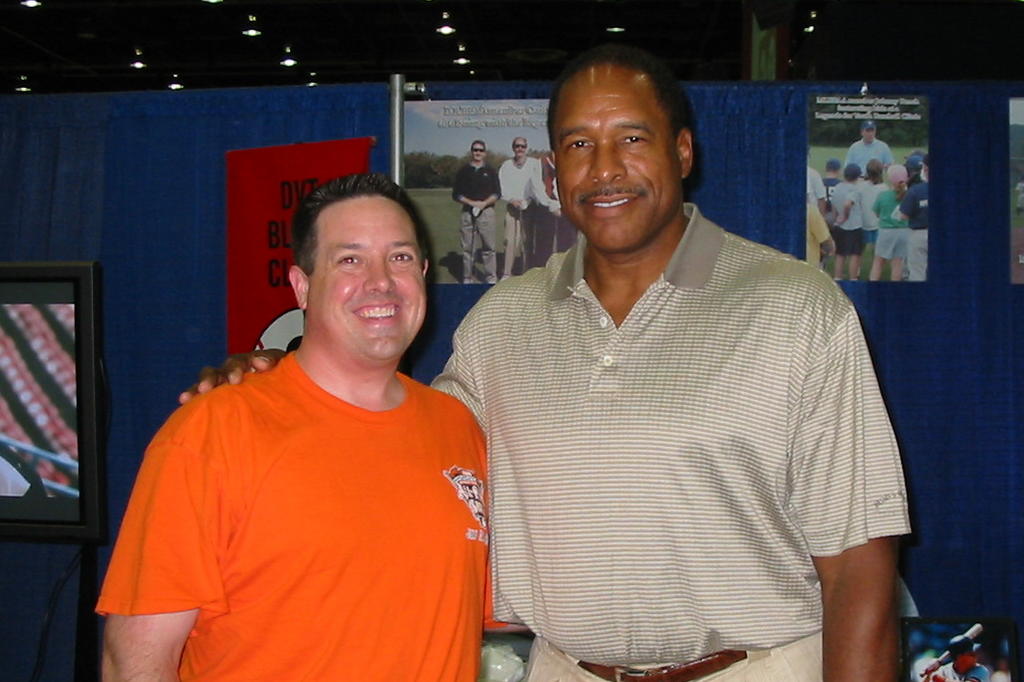
Me and Dave Winfield

Not 10 feet away stood another Hall of Famer, Phil Niekro. Phil was there raising awareness for deep vein thrombosis, better known as blod clots. Seems odd, I know.

Of course, Phil was another Yankee. And while not quite as sinister, he was a long-time Brave before that. Ran through the same checklist, with the only difference was that Phil did have a milestone achievement -- win No. 300 – in pinstripes.

Took another chance, and Phil was a nice guy, too, even shaking my hand a second time. “Read this stuff, guys,” he said, pointing to the deep vein thrombosis pamphlets. “It’s important.”

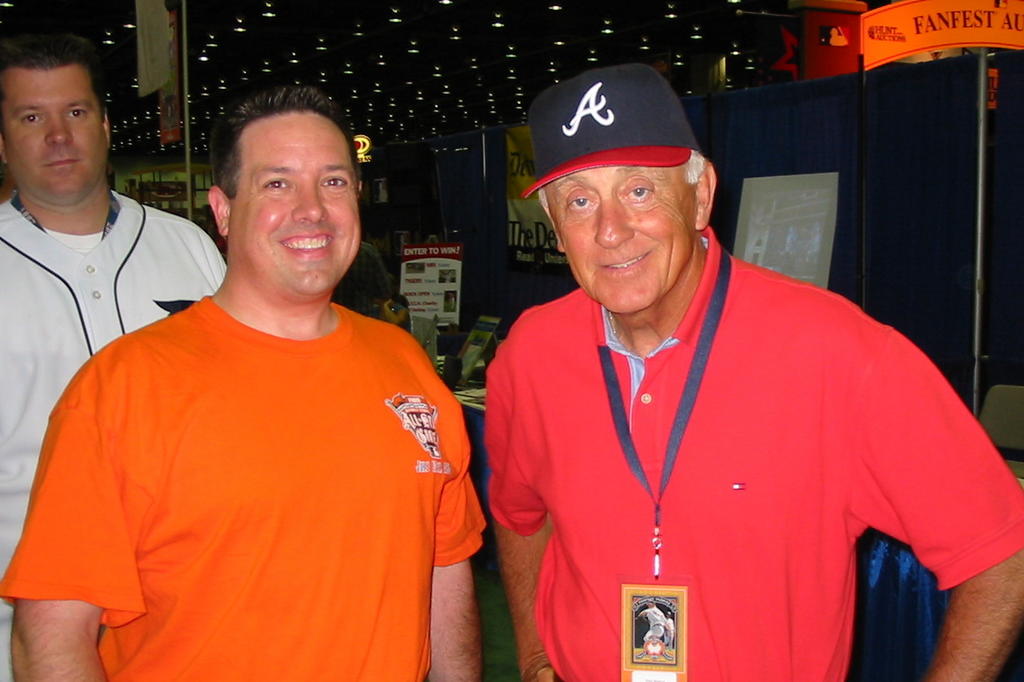
Me and Phil Niekro

Snapping photos with two Hall-of-Famers in the first 20 minutes is a good way to start the day, and I heard loud cheers from another area. Scrambling over, I saw none other than Alex Rodriguez in the baseball clinic area.

Another Yankee. What, was Carlos Beltran not available? ARod was supposed to be bestowing his baseball knowledge on a bunch of elementary school kids who were hitting off tees on a mock diamond. I noticed much of his bestowing consisted of “Good!” and “Nice,” as the kids flailed at the sponge balls.

It was nice to see ARod up-close, but I was in need of a serious Mets infusion. The official All-Star store was nearby, and I had plans. I’ve been waiting to buy the new batting practice cap. The sizes on these things are goofy, and I’d wanted to be able to try one on before purchasing, rather than ordering one through the mail.

I made it back to the Wall of Caps where every team and their assorted home, road and alternate caps were to be available. Locating the batting practice caps, I saw, Pirates, Mariners, Yankees, more stinking Yankees….and no fine orange-and-blue headware!

“Oh yeah, we must be out of them,” grumbled a clerk. Denied!

Things were not looking up, but I had a lot of fun scanning the exhibits on the Negro Leagues, the making of bats and gloves, seeing some of baseball’s trophies and other diversions.

More troublesome, the buzz throughout the day was about whether Rangers pitcher Kenny Rogers was going to play in the All-Star Game.

Rogers, of course, is facing a 20-game suspension. I don’t get it. Stomping on a TV cameraman is only the second-biggest atrocity "The Gambler" has committed.

This is the guy who, while pitching for the Mets in the crucial Game Six of the 1999 National League Championship, started the 10th inning by serving up a lead-off double to weak-hitting Gerald “Ice” Williams, then walked the next three batters to hand the Braves a trip to the World Series. And I’m supposed to be upset because he kicked a cameraman?

But I digress.

Later, I sought to shake loose some of my aggression in the Home Run Derby activity, where a guy feeds a baseball into a pitching machine and you hit for distance. After a couple of misses, I got my timing down and even launched a couple spongeballs off the convention center wall, earning me a prize – a player pennant.

I was handed a pennant of Roger Clemens. Sweet!

Looking closer, it's Clemens depicted as a bat-tossing Yankee. Son of a ...!

The last activity was a video pitching cage. It’s like one of those speed pitch booths, but you throw at a video of a batter projected on slots. As the ball passes through, the machine records your speed. If you hit the strike zone, the video of the player swings and misses. If a ball, he steps out off the plate. You keep throwing until he either walks or strikes out.

You get to select the batter from a list that ranges from the Phillie Phanatic to Barry Bonds. I did this a couple of years ago against Mets-killer Chipper Jones, and it didn’t end well. OK, it ended well for Chipper, inflicting yet another wound on the Mets.

This time, I knew I had to battle a Yankee to reverse the karma of the day. The attendant asked who I wanted as I stepped to the plastic pitching rubber. JETER! I barked before he even finished.

The video image of the Smug One stepped to the plate, and I fired my first pitch. Beauty. Strike one. And I think the gun that measures pitch velocity is set on “flatter” because I don’t think I actually threw 62 mph.

Second pitch sailed high, a ball.

Third pitch nailed Jeter right in the video batting helmet. Not necessarily a bad thing. The attendant laughed. “You must me a Mets fan.” Darn right.

Fourth pitch was grooved down the middle, and the projected Jeter flailed. Sweet! One more strike and all those Mets defeats and mockery at the hands of Yankee fans would be avenged.

Fifth pitch sailed wide. Full count.

Flop sweat had kicked in. Not good, not good at all. As soon as the ball left my hand, I knew. Way high. I swear the video Jeter smirked as he walked toward first, probably advancing Chipper Jones to second base, having walked two years ago.

Beaten by the Yankees, again. They will break your heart. Every time.

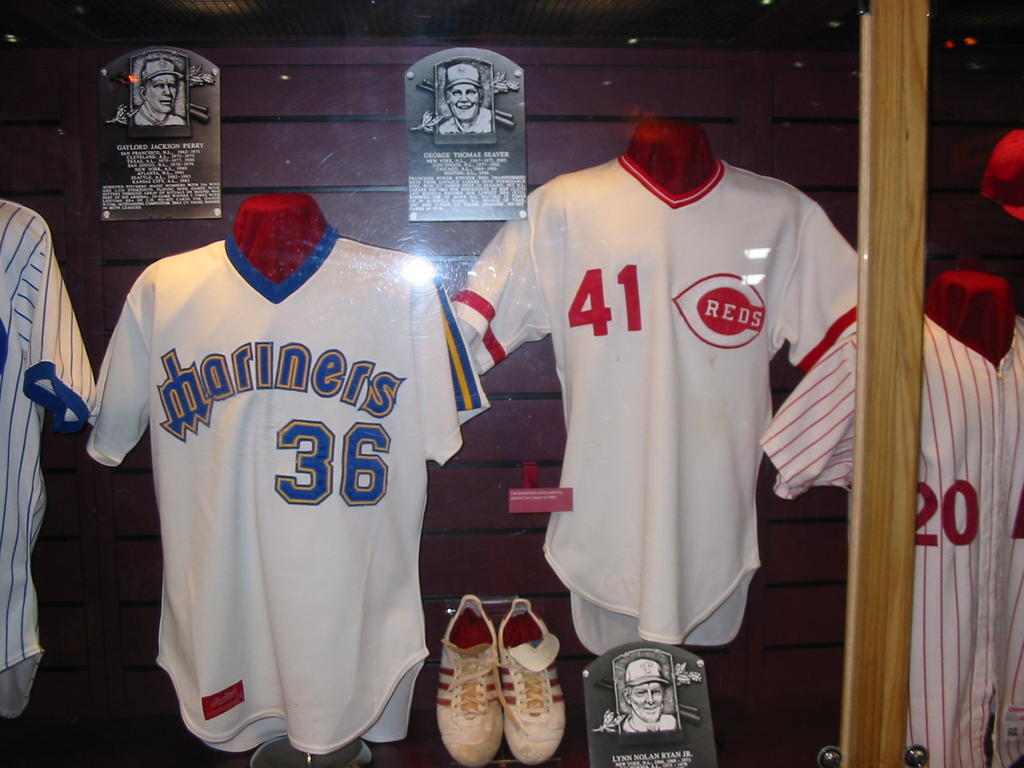
Alas, I passed the Hall of Fame display on the way out. And there, shining like the Holy Grail was a game-used Tom Seaver jersey, nestled between treasured relics of Gaylord Perry and Mike Schmidt.

It was one of Tom’s Reds jerseys, but that was as close as I was going to get.

A Seaver jersey reminds us of all that is good in the world, that baseball is a glorious game and the Yankees will get what is coming to them.

Eventually.

Thursday, July 07, 2005

Busch Stadium Memories (Part One): Doc Gooden and Lots of Ice Water


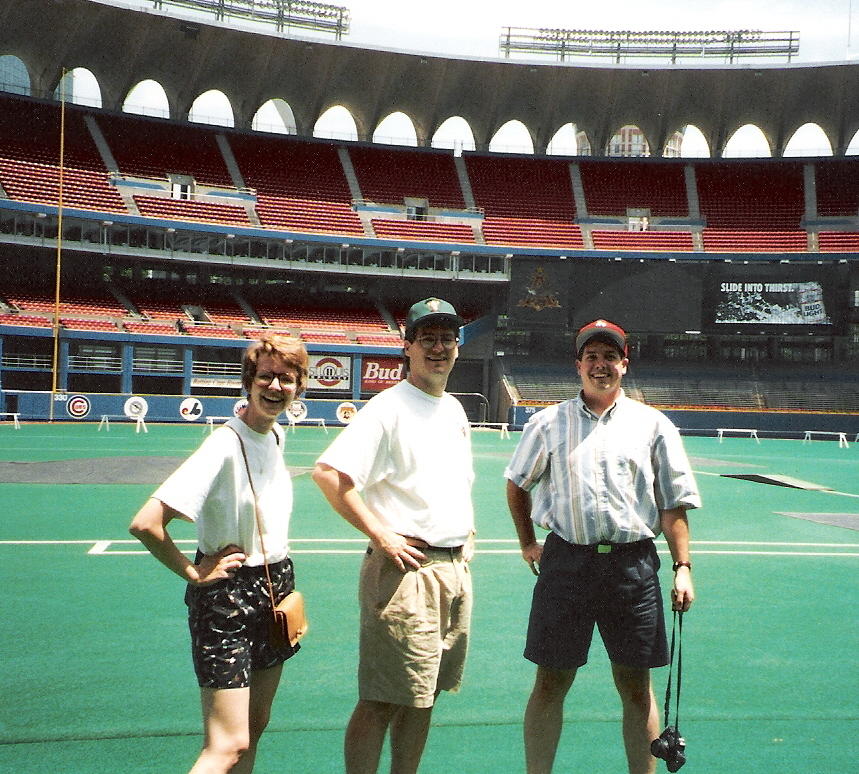
Julie, Tony and me at Busch Stadium in 1993.

It used to get so hot on the Busch Stadium artificial turf that players would run off the field after each inning and jump — spikes and all — into tubs of ice water kept in the dugout.

I got this from a pretty good source: former Cardinals outfielder Bernard Gilkey.

Busch, despite the apparent discomfort for players in the humid Missouri summers, is one of my favorite places to see a game. I was sad when I realized this was the final year for the yard.

It’s certainly true that Busch is a multi-purpose ash tray along the lines of Three Rivers, Riverfront and the Vet, all of whom have preceded it in being demolished. But the little arches along the top made it a little different, and adding natural grass a few years back was a tremendous step forward — and I presume a step cooler, too for the players. Plus, Cardinal fans are among the best in all of baseball and you can’t help but get swept up in the group hug that is a game at Busch.

I’ve been able to attend six games at Busch over the years. Here are some of my favorite memories:

April 24, 1985: Cardinals 5, Mets 1

I was getting pretty homesick toward the end of my first year at University of Missouri, and my passion for the Mets was not a well-concealed secret.

So when a friend from the dorm suggested I join him for a sprint to St. Louis to see the Cards play the Mets, I jumped at the chance even though it meant skipping out on my News 105 class -- the boot camp of journalism school. It was the first time I’d seen the Mets as a visiting team.

This was at the height of the Cardinals-Mets rivalry, and the pitching match-up couldn’t beat. Dwight Gooden was early in his Cy Young Award season, and Jaoquin Andujar was the Cards’ ace.

Gooden lost just four games all season, and I saw two of them in person. This was one. He didn’t pitch poorly, giving up two runs on four hits in seven innings. But the Mets couldn’t manage more than a run off Andujar.

The Cards, of course, went on to choke away the World Series to the cross-state rival Royals that season, with Vince Coleman getting run over by the Busch Stadium tarp machine and Andujar melting down in Game Seven.

Andujar – who was never the same after that season – didn’t fully grasp English, as indicated in his famous baseball quote. “There's one word in America that says it all and that one word is ‘You never know.’”

The News 105 professor also happened to the School of Journalism’s assistant dean, and he was curious why I missed class.

“Mets were playing the Cardinals, Gooden vs. Andujar,” I pleaded. Of course he'd understand.

His stone-faced response: “Interesting. Not a valid excuse, but interesting.”

July 10, 1993: Cardinals 9, Rockies 3

My editors at The Flint Journal knew of my love for all things St. Louis and sent me to write a travel story about the city. Armed with an expense account, my wife and I caught up with my buddy Tony and his wife for a weekend of fun – all in the name of research, of course.

Tony, a man of remarkable patience, survived being my roommate at Missouri, and we’ve been close since.

Naturally, a game at Busch Stadium was on our list of things to see, and the Rockies, in their inaugural year, were in town. Even more exciting, we found out that the Cardinals offered stadium tours.

This was too good to pass up. We were not allowed in the clubhouse – there was a game that night, after all -- but we got some behind-the-scenes peeks of the press box and other areas.

The highlight, by far, was going out on the field and hanging out in the dugout. The artificial turf was indeed like fuzzy concrete with very little bounce. That didn’t stop us from doing sweet Ozzie Smith flips. Well, more like Tony holding my feet while I did something resembling a handstand for a photo. But properly cropped, me and Ozzie are one and the same!

After exploring the field, the tour took us into the Cardinals museum, which has since moved across the street. The Cards have a pretty rich history, and it was all displayed well. Much to our glee, we found that on some Saturday afternoons, a Cardinals player is in the museum to meet fans.

And there, as if he was one of the exhibits, was outfielder Bernard Gilkey. There wasn’t a big crowd that day, so we had plenty of time to chat.

This was a surprise, so I wasn’t prepared with a ball for Bernard to sign. I offered the bill of my Cards home cap as he gave us the inside scoop about the turf, and that the temperature on the field sometimes reached 110 degrees, hence the ice water.

We returned later for the game, a Cardinals rout over the expansion Rockies. Mark Whiten and Brian Jordan supplied much of the damage, hitting three- and two-run jacks.

I've had some other adventures in Busch, but we'll save those for later.

Sunday, July 03, 2005

Every Signature Tells a Story: Reggie Jackson, Punk


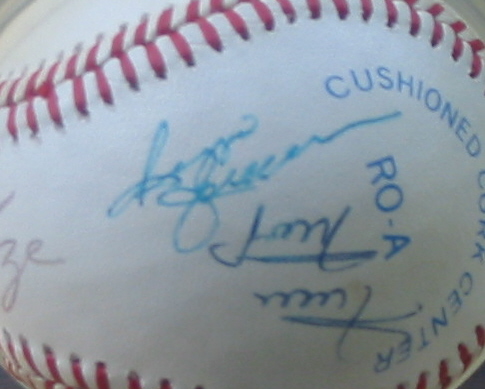
Reggie's signature on the Hall of Fame ball, and Willie Mays, too.


It’s my fault. I accept all the blame. I trusted a Yankee.

To be fair, Reggie Jackson had two strikes against him even before he picked up the famed Hall of Fame ball.

His two-run blast in Game Seven of the 1973 World Series crushed the Mets’ bid for a championship. Then he became Mr. Yankee, forcing all of us to have to endure endless stories about those three home runs in the 1977 series against the Dodgers.

But Reggie’s actions at a 1989 baseball card show in New Haven, Conn., were shameful -- even by Yankee standards.

My Hall of Fame ball is a prized baseball possession, second perhaps only to my autograph-filled Mets history book.

Autographs were fairly inexpensive then. Card shows were just starting to pop up as the hobby was taking off. I jumped at chance to meet any Hall-of-Famer who passed through the area and thought it would be fun to have them all sign the same ball.

It’s been signed by Tom Seaver, Willie Mays, Stan Musial, Bob Feller, Duke Snider, Harmon Killebrew, Whitey Ford, Monte Irvin and Johnny Mize.

Sometimes I had to think long and hard about whom would gain entry. Some of the recently retired players were making the rounds and I wanted to limit the ball only to guys who would eventually be enshrined in Cooperstown.

Seaver was a no-brainer, of course. But I wasn’t sure about Steve Garvey, so he didn’t get to sign the ball. I was on the fence about Dave Winfield. He was still a ways from getting his 3,000th hit at the time and didn’t ask him to sign, a mistake in hindsight.

I had no doubts about Pete Rose — did any of us? He remains the only person on the ball who isn’t in the Hall of Fame. Pete signed while he was still managing the Reds, and I remember there two televisions showing football games near the table where he was applying his signature to the parade of balls, photos and bats, which I thought it was odd at the time.

Reggie was appearing at a show where several 1980s Mets were signing, and I thought it would be fine to add another Hall-of-Famer to the ball. He wasn’t enshrined yet, but a safe choice.

And as with the book, I like to shake hands with the player and maybe ask a question or two. Several of the players commented on the ball, treating it respectfully and turning it around to see the other signatures.

It was near the end of Reggie’s time to sign, and the line wasn’t very long as I approached.

I handed Reggie my ball and extended my hand for him to shake. He barely looked up as is signed and refused to shake my hand, leaving it hanging there.

Then Reggie palmed my prized ball and started banging it -- banging it! -- on the table.

“Let’s go! Let’s go! Let’s go!” he said, thumping the ball three times, then rolling it down the table. I had to move quickly to catch the ball before it rolled off the side and on to the floor.

I was absolutely stunned. “What a jerk!” I said to no one in particular.

I realize that Reggie was under no obligation to shake my hand, answer a silly question or even make eye contact. I paid for a signature, and that’s what I got.

But to take my prized ball, bang it on the table and roll it away was just horrible.

But I learned a valuable lesson that day. Never, ever trust a Yankee.